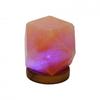
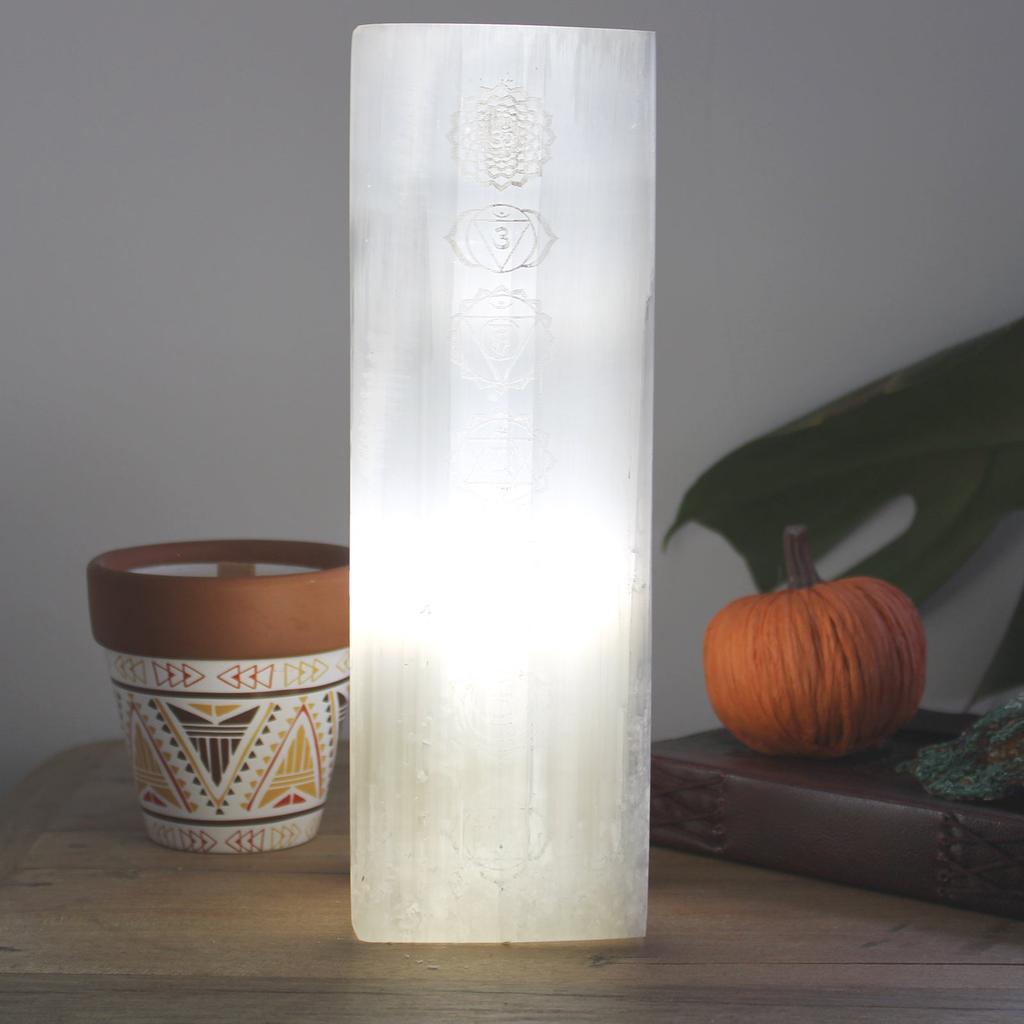
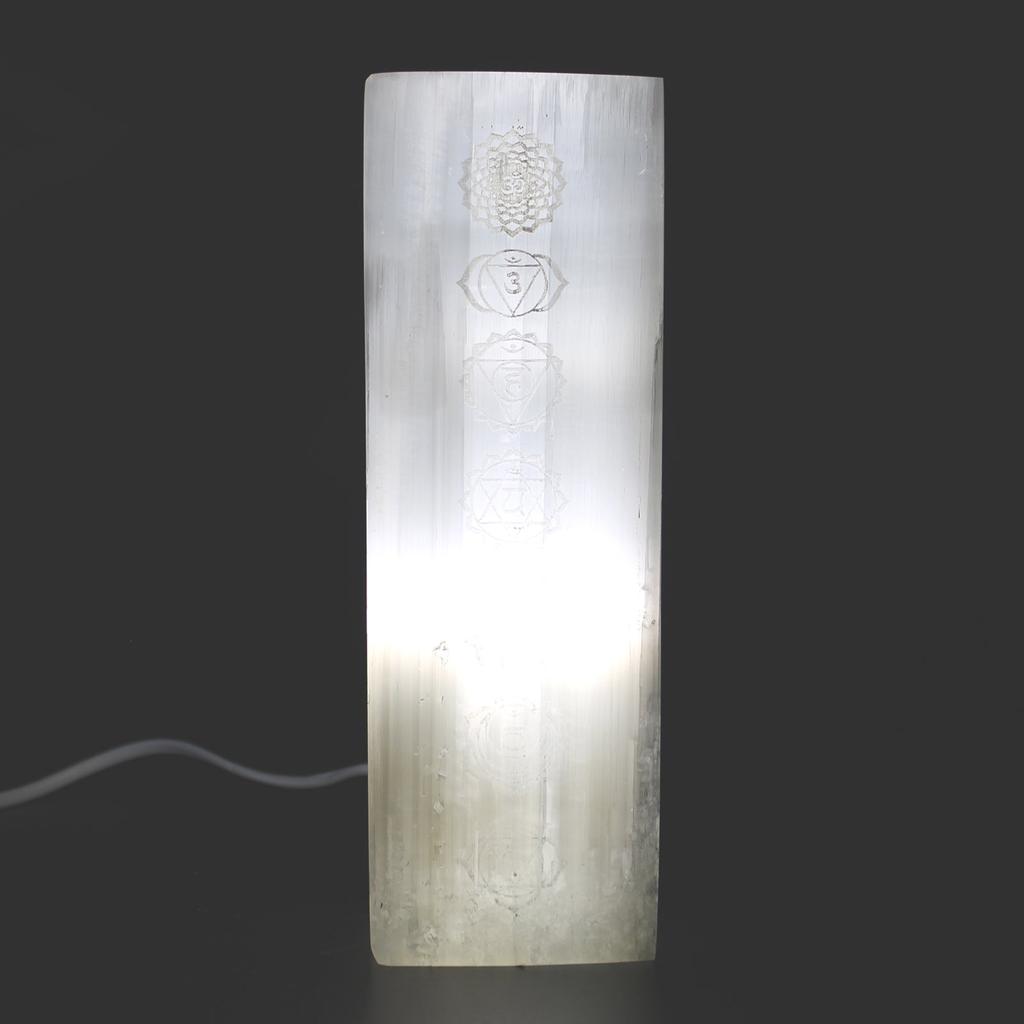
Hold a selenite block lamp up to the light before you switch it on, and you already understand what it does. The stone is naturally translucent, its fibrous layers running in parallel striations that catch and scatter light from within. Lit, it casts a soft, warm glow across a room, not bright enough to read by, but exactly right for an evening wind-down or a quiet corner that needs a little life.
What the light does in a room
The striations in the stone create a gentle, uneven luminosity, no two lamps throw quite the same pattern of light and shadow.
At 25 cm tall, it has real presence on a shelf or bedside table without overwhelming the space around it.
The glow is warm and ambient rather than functional, this is a mood lamp, not a reading light.
Each block is unique in its banding and translucency, so the lamp you receive will differ slightly from any photograph.
The mineral itself
Selenite is a crystalline form of gypsum, formed in ancient evaporite deposits, dried seabeds and salt flats where mineral-rich water slowly evaporated over millennia. Morocco, where these lamps originate, sits above some of the world's most extensive selenite beds. The name comes from Selene, the Greek goddess of the moon, a reference to the stone's pale, luminous quality that has been noted since antiquity. Roman builders once cut thin sheets of it to glaze windows, they called it lapis specularis, the see-through stone.
It is a very soft mineral, sitting at Mohs 2, which means a fingernail can scratch it and it splits readily along its natural cleavage planes. That softness is also what makes it glow: the fibrous crystal structure scatters light rather than blocking it, giving the lamp its characteristic warmth.
Cut and fitted
Each block is cut from raw selenite, which accounts for the variation between pieces. The lamp arrives with a cable and bulb included, ready to plug in. The bulb will make the lamp warm to the touch during use; this is normal and expected.
…
region of manufacture: Morocco




 Teslim edilmediğinde para iadesi