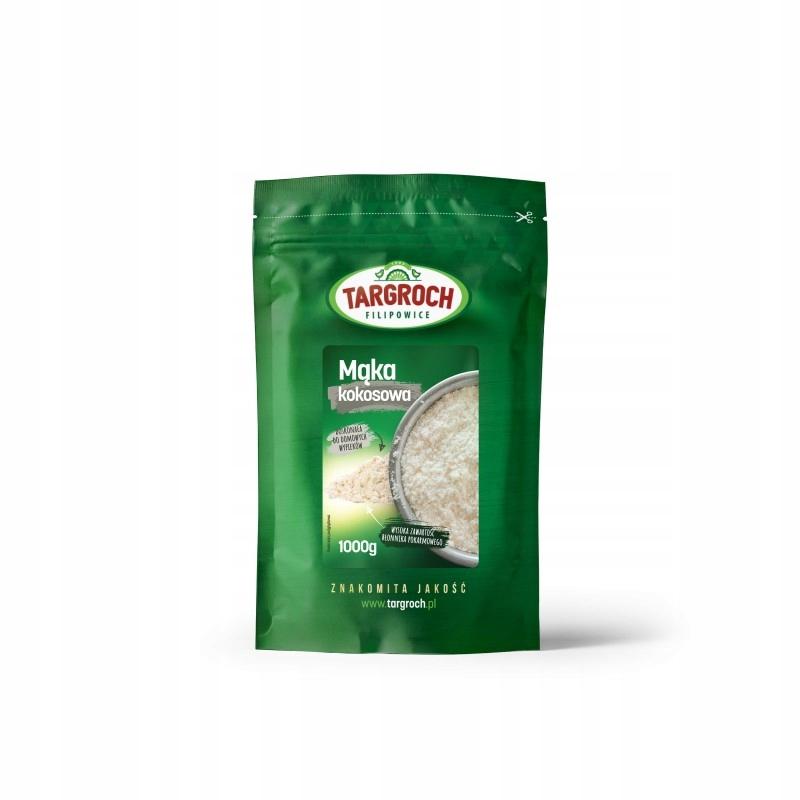
COCONUT FLOUR Coconuts are unique nuts – not only because of their considerable size, but also because nothing from the many different parts of the coconut palm is wasted. Thus, among coconut products, we distinguish milk, water, oil, shredded coconut, as well as sugar and flour. How does it differ from grain flours and how can it be used in the kitchen? PROPERTIES Coconut – unique Coconut flour, in terms of its extraction, is actually a leftover from the production of other coconut products. It is obtained during the production of coconut oil and milk, as a byproduct. The liquid and fat are removed from the nut's flesh, and the remaining pulp is ground and dried. It has a delicate coconut aroma and a slightly sweet taste. Due to its origin, it is completely gluten-free and can be eaten raw. Fiber and protein make up more than half of coconut flour's nutritional value. It is also very low in carbohydrates. This makes it a popular choice for athletes, those watching their figure, and diabetics. When choosing coconut flour, it's not worth focusing on calories, as its richness in protein, fiber, and minerals makes it an obvious choice. APPLICATIONS What to add coconut flour to? Before using coconut flour for the first time, it's important to know how to handle it. Since it can be eaten raw, the easiest way is to add a spoonful or two to a fruit smoothie or oatmeal. Another way is to try baking with coconut flour. Due to its strong thickening properties and heavier weight, it doesn't work well as a standalone substitute for wheat flour, especially for cakes that require rising. The best method is to mix several types of flour, so that coconut flour constitutes about 15% of the total. This ratio will allow the dough to rise freely, and will also lower the glycemic index of the baked product and enhance the flavor. What else can coconut flour be used for? For example, for healthy power balls, banana bread, breadcrumbs, hot and cold desserts, milkshakes, and dough for sweet dumplings and pancakes. Remember to add the appropriate amount of water and—if desired—slightly less sugar than usual when using coconut flour. ^ High in dietary fiber INGREDIENTS Coconut flour STORAGE Store in a dry and cool place in a tightly closed container. NUTRITIONAL PROPERTIES


 Teslim edilmediğinde para iadesi