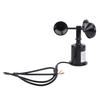
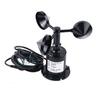
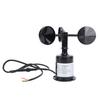
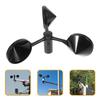
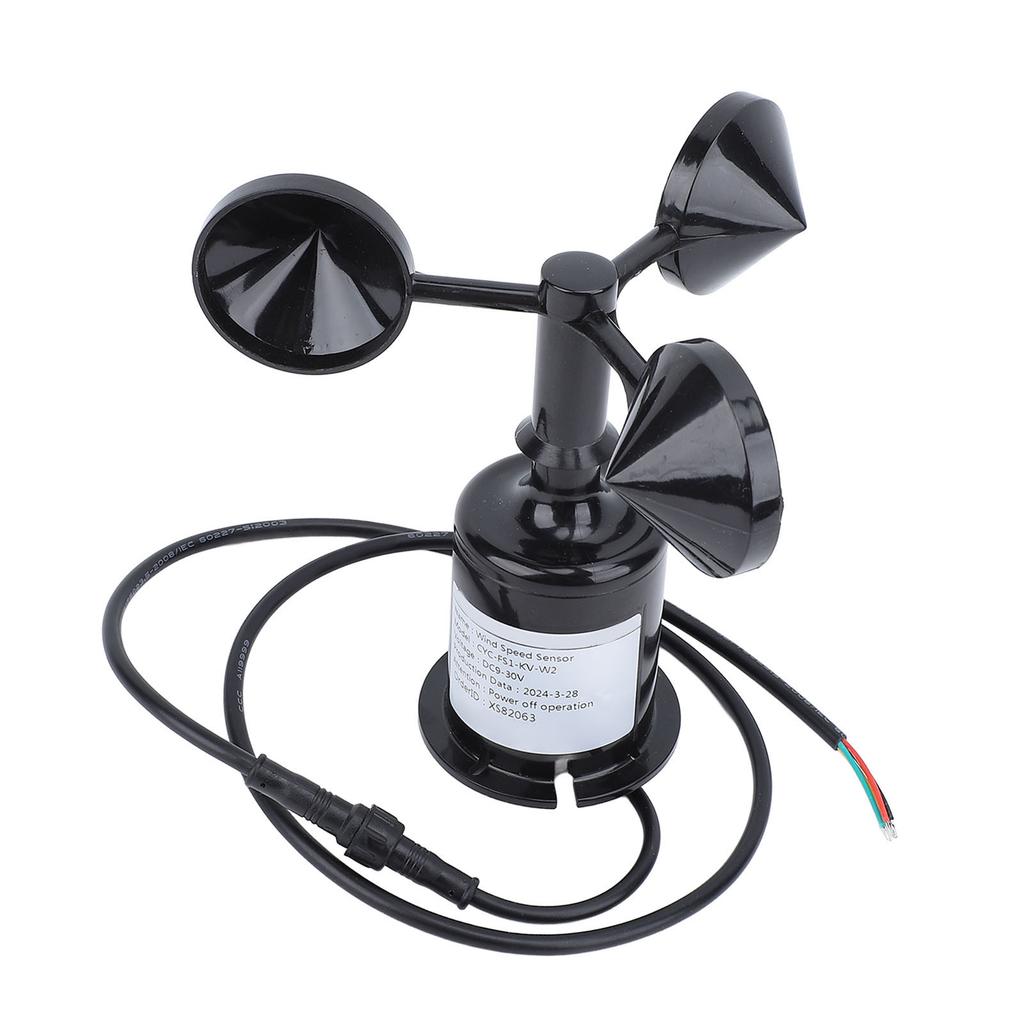
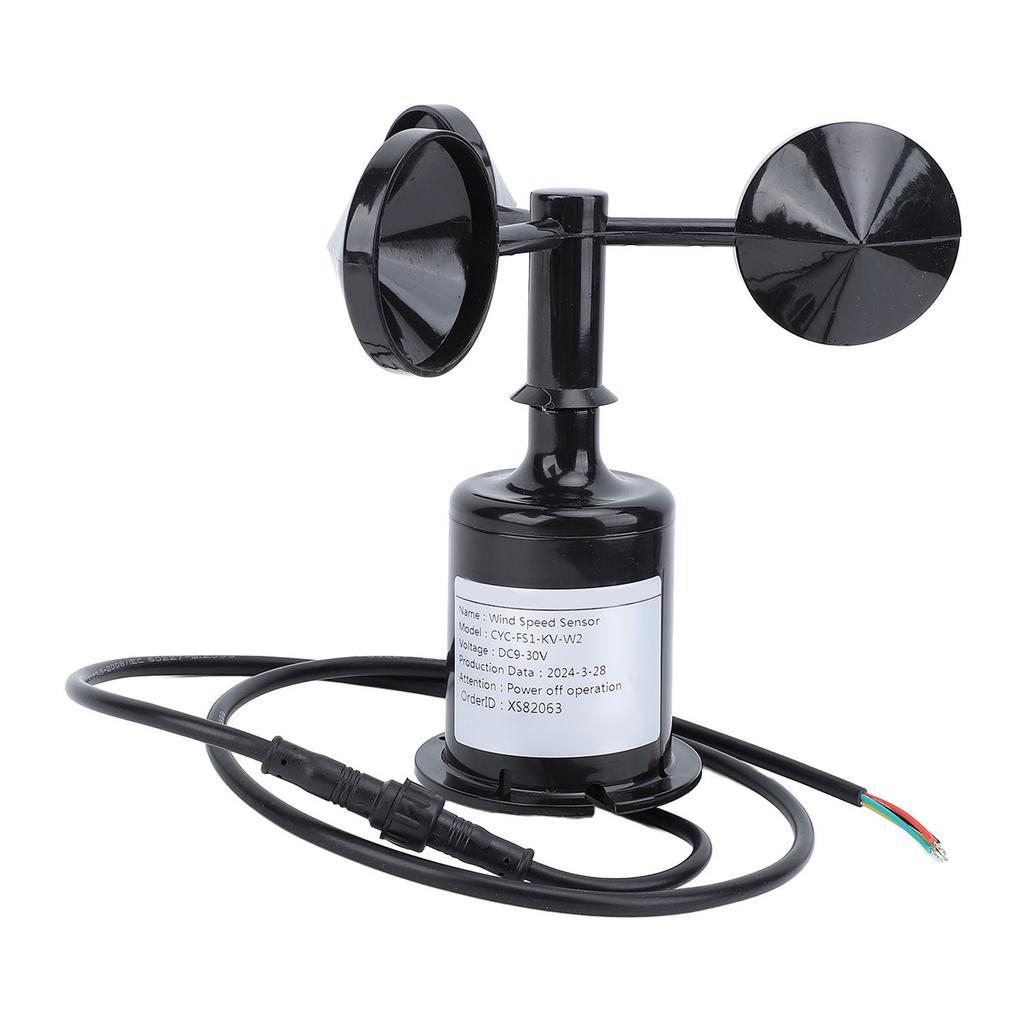
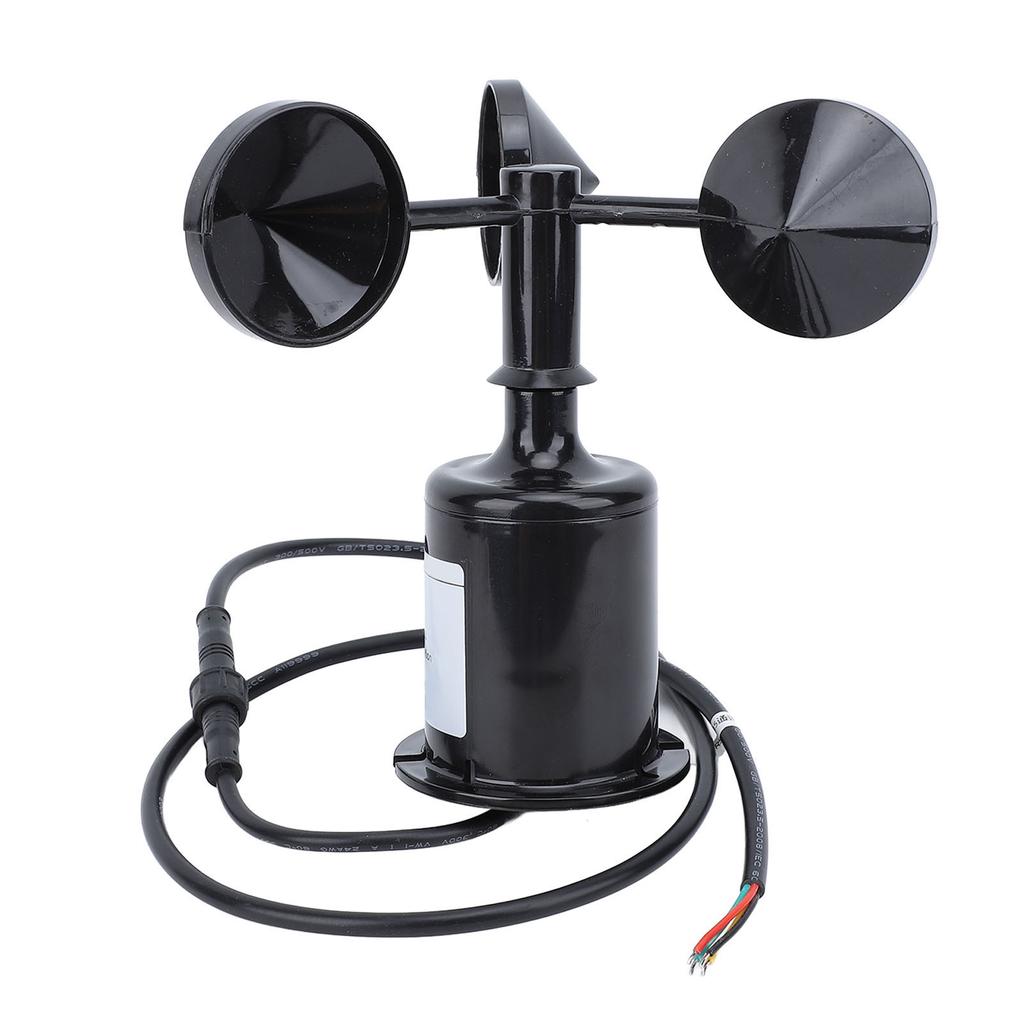
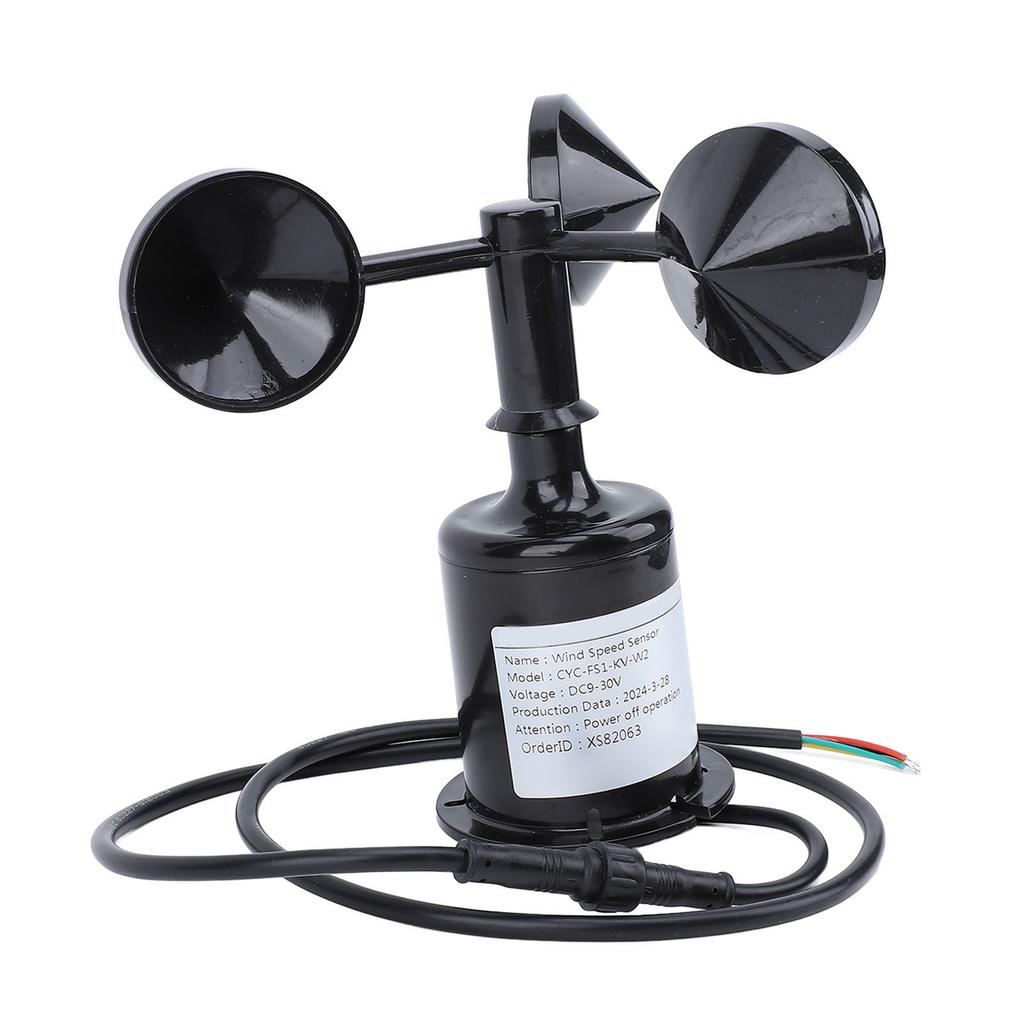
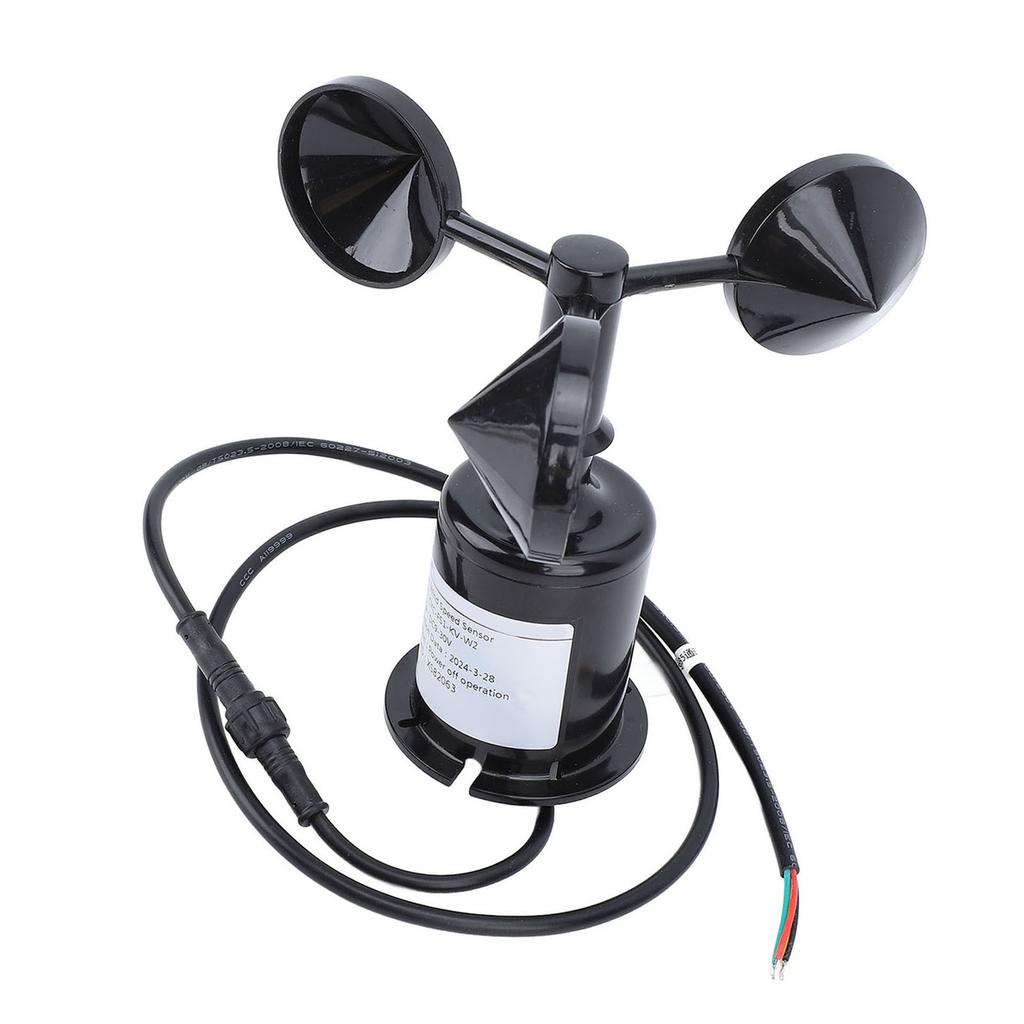
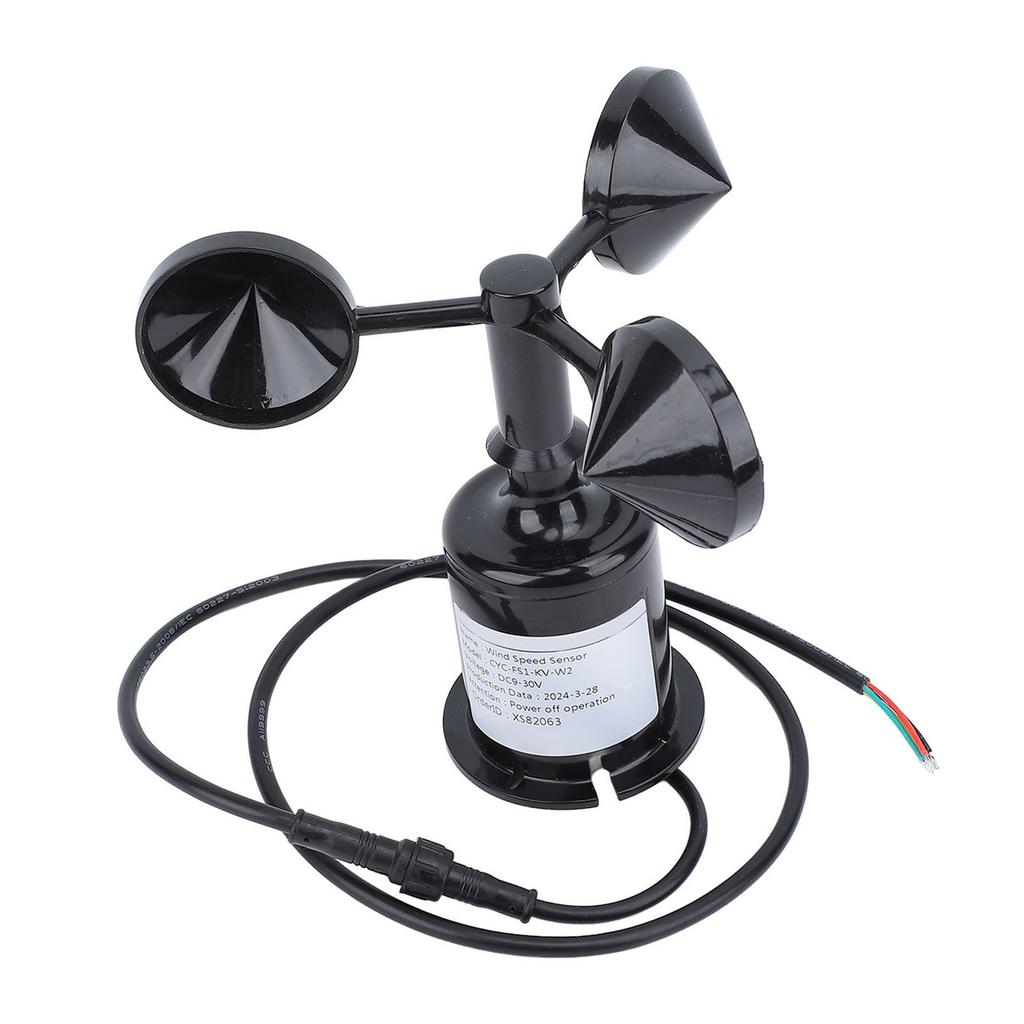
PREMIUM MATERIAL: The wind cup of 3 cups wind speed sensor anemometer is made of ABS material, high strength, small startup wind speed, excellent anti erosion performance.
ANTI INTERFERENCE: Wind speed meter sensor has strong interference ability, suitable for a variety of ha h environments, strong wind resistance.
LIGHTWEIGHT AND PORTABLE, EXTENSION CABLE: The wind speed sensor anemometer is small and lightweight, easy to carry and assemble. Equipped with an extension cable, the length of the extension cable at the connection is 0.8 mete .
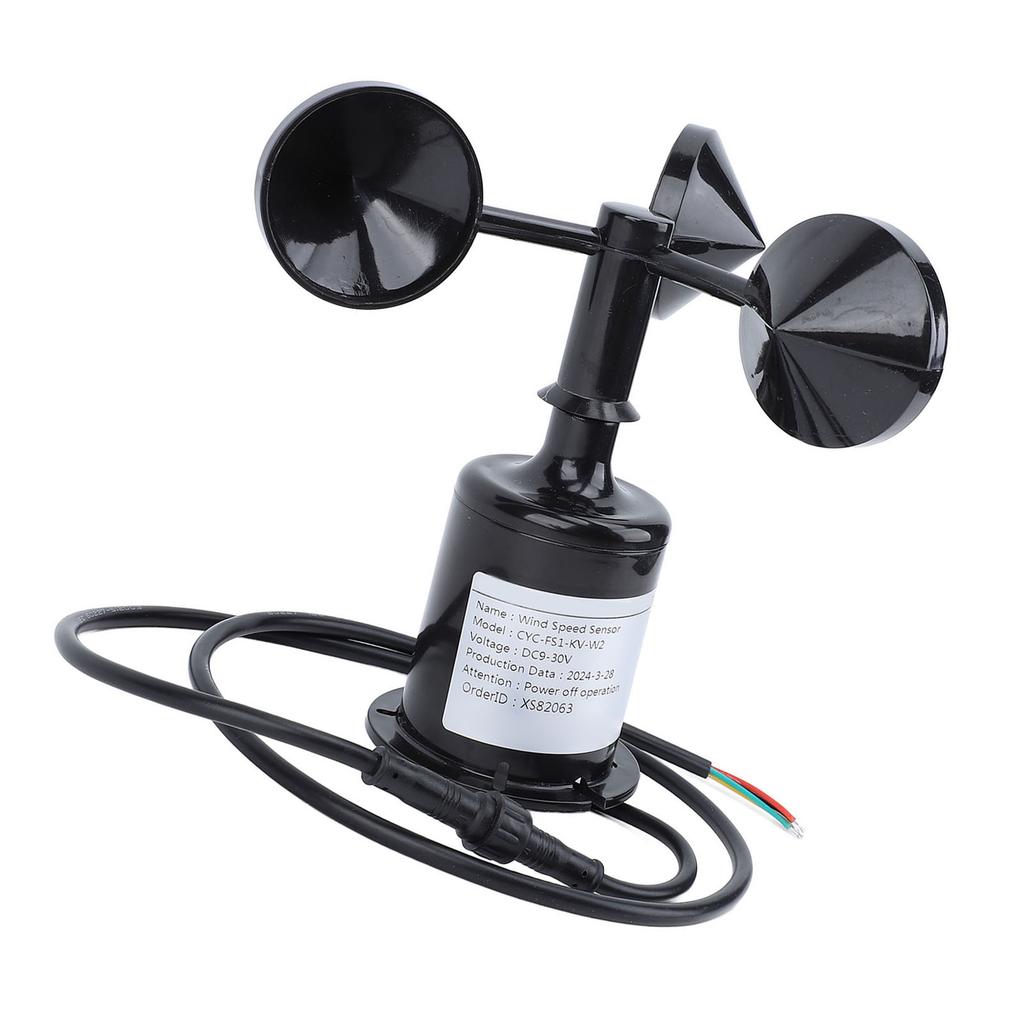
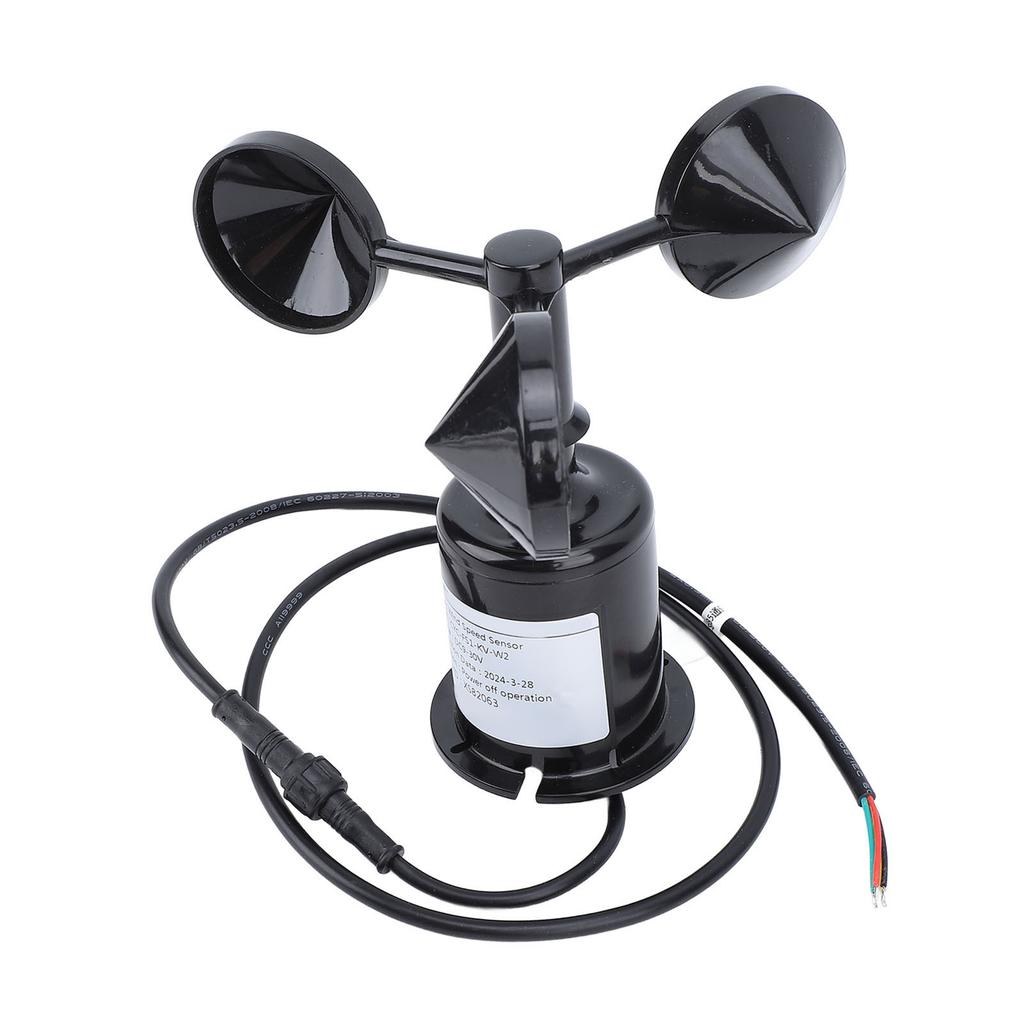
Item Type: Wind Speed Sensor
Material: ABS
Size: Approx. 158x180x70mm Celsius 6.22x7.09x2.76in
Weight: Approx. 272gCelsius9.6oz
Power Supply Voltage: 9-30V
Telecommunication Type: for (Default for Protocol)
Measuring Range: 0~70mCelsiuss (Pulse, 485, 232 Output)
Extension Line Length at Connection: Approx. 0.8mCelsius2.6ft
Accuracy: +Celsius- (0.5 + 0.02V) m Celsius s (V Represents the Real Time Wind Speed Value)
Resolution: 0.1mCelsiuss
Starting Wind Speed: less than 0.8mCelsiuss
Maximum Power Consumption: 0.48W
Load Capacity: 12V Power Supply, Current Type Output Impedance less than 350 Ohm
24V Power Supply, Current Type Output Impedance less than 900 Ohm , Voltage Type Output Impedance more than 1K Ohm
Operating Environment: Temperature -35 celsius ~60 celsius , Humidity less than 100 Percent Without Condensation
Grade: IP64
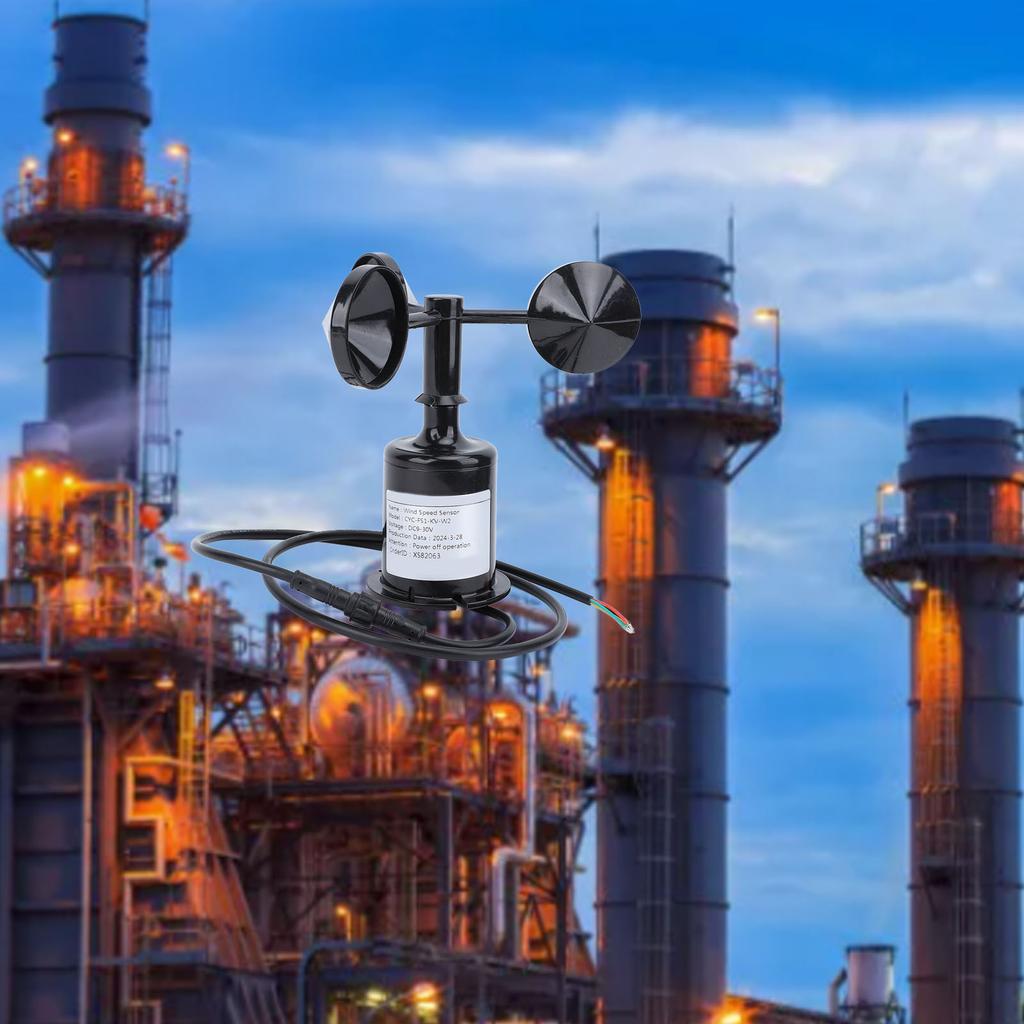
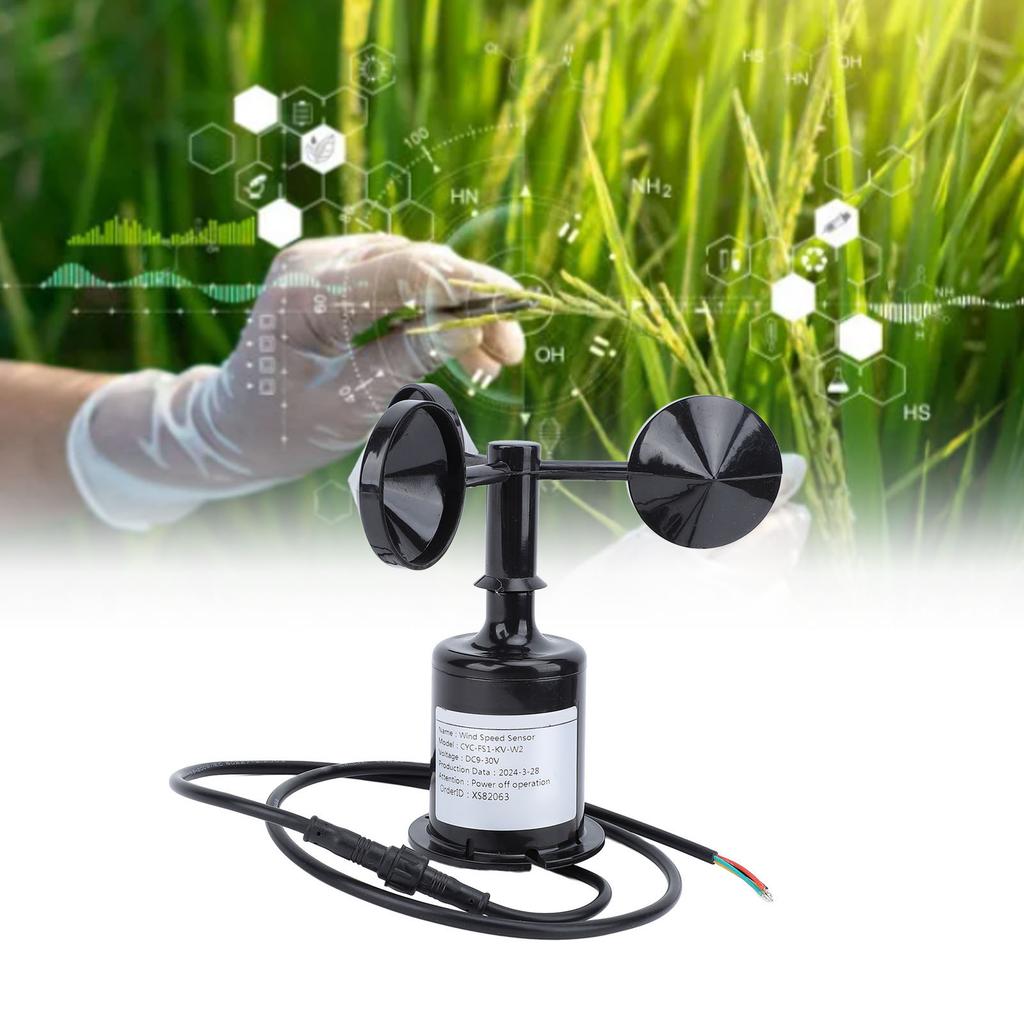
Widely Used In: Greenhouse, Eco Friendly, Weather observatory, Ships, Docks, Breeding, Advertising Gates, Meteorology, Marine, Environment, Airports, Ports, Laboratories, Agriculture and Transportation and Other Environments of the Wind Speed Measurement.
About the sensor telecommunication protocol description :
Fi t, if you are using a single sensor connected to the computer to read data directly, it is recommended to use the company s private protocol (see page 3), you can visualize the data in ASCII (hex send, non hex receive);
Second, if you are a multi sensor interconnection with PLC, configuration or programmable collector, it is recommended to use the standard for RTU protocol.
Third, If there is no special requirement, the default device address in the sensor paramete is 1, baud rate = 9600, protocol for RTU.
Standard for RTU telecommunication protocols :)
Serial Format
Data bit 8 bits, stop bit 1 bit, parity bit None, default baud rate 9600bps, serial debugging software set to hex send and receive, two telecommunication intervals of at least 500ms or more, CRC in the manual is the parity bit, 2 bytes. The default device address is 1.
for CRC checking steps :.
1. Preset the 16 bit register to hexadecimal FFFF, call this register as CRC register;
2. Isolate the fi t 8 bit data with the lower bit of the CRC register and put the result in the CRC register;
3. check the lowest bit by ing the contents of the register one bit to the right (towards the lower bit) and filling the highest bit with a 0;
4. If the lowest bit is 0: repeat step 3 ( again) if the lowest bit is 1: the CRC register is iso orthogonal to the polynomial A001 (1010 0000 0000 0001);
5. Repeat steps 3 and 4 until it is ed right 8 times so that the entire 8 bit data is all processed;
6. repeating steps 2 through 5 for the 8 bit data;
7. The final CRC register obtained is the CRC (the CRC obtained is low before high).
Wiring (Wire Respectively)
Wire Color: Output Signal ( )
Red: Power Positive
Black: A+
Yellow: B-
Green: Power Negative
Distribution Diameter: Approx. 63mmCelsius2.48in
Installation Hole Diameter: Approx. 3.2mmCelsius0.13in
Diameter of Aerial Plug: Approx. 15mmCelsius0.59in (It Is Recommended to Reserve 25mmCelsius0.98in for Wiring, Fi t Wiring, Then Installing Fixed Senso )
Troubleshooting:
1. The wind blade does not rotate properly and has a large hysteresis. There is foreign matter or jammed in the bearing due to term use. Please


 Teslim edilmediğinde para iadesi