The history of tinware in Japan is ancient, dating back to 1500 BC when a tin water jar was discovered in the ruins of an ancient Egyptian city. Tin's unique luster and low melting point have made it a popular material for making utensils and other objects in countries around the world since ancient times. In Japan, tin was introduced to Japan by Japanese envoys to the Sui and Tang dynasties between the 7th and 9th centuries, and several pieces are preserved in the Nara Shosoin, a treasure house renowned for its rich history. Historically, tinware was primarily used for religious items such as sake bottles and sakaki vases, as well as tea caddies and saucers, and was favored by a select few, including those in the imperial court. However, during the Edo period, it became widely used by the general public. With advancements in technology, it became possible to produce a wide range of utensils, including sake bottles, tea utensils, tableware, and decorative items, and it is now cherished as tableware for general households, as well as for gifts, presents, and commemorative items. Characteristics of tinware: Tin does not usually rust or tarnish. With proper care, its warm luster and sheen can be enjoyed for a long time. Tin molecules are coarse and are said to adsorb impurities in water and alcohol, making the taste milder. Furthermore, it is harmless, odorless, and has been used as a material for tableware since ancient times. The "Osaka Tinware" technique originated with the first Ihei (Suzui), who followed the tradition of Kyoto tinware that spread from Kyoto to Osaka in the late Edo period, and flourished in Osaka for generations. Later, in order to rebuild Osaka's tin industry, which had been devastated by World War II, craftsmen from the Imai, Tono, Tanaka, Nakatani, and Ichimura families gathered to establish Osaka Tinware Co., Ltd. in 1949, and it continues to this day. Our creations may be expensive if they were merely functional, and their shapes may be familiar if they were considered "novel." However, each piece is carefully crafted based on the belief, refined over hundreds of years, that they are "beautiful, and even more importantly, practical." Rather than being swept away by fleeting trends, its value increases and deepens with continued use over time. Its crisp, cool appearance enhances the flavor of beverages. It is also a recommended item for presents and gifts. Care Instructions After use, wash sake bottles and tumblers with lukewarm water and mild detergent, rinse thoroughly, and drain the water. Tin is mainly shaped and polished using a potter's wheel. To remove dust and dirt, gently wipe along the circumference with a soft cloth. For heavy soiling or slight discoloration, apply mild detergent or baking soda to a used sponge and wash evenly along the circumference with a little more force. Most dirt can be removed with this method. (However, for oxidized products, using a sponge may cause the oxidation to peel off, so wipe off dirt with detergent and a soft cloth.) Precautions for Use When using tinware, please note the following points. The main characteristics of tinware are as follows: Because tin is a soft metal, it may be scratched by fingernails, and it may dent if dropped. Due to its high thermal conductivity, it becomes too hot to hold if filled with hot liquids. Avoid highly acidic beverages (such as lemon water) as they may cause discoloration. Do not store in the freezer compartment of a refrigerator. The crystal structure may change (tin pest), causing the tinware to easily crumble. It is not suitable for use in dishwashers or microwave ovens. Even today, tinware is still meticulously crafted one piece at a time using traditional methods.
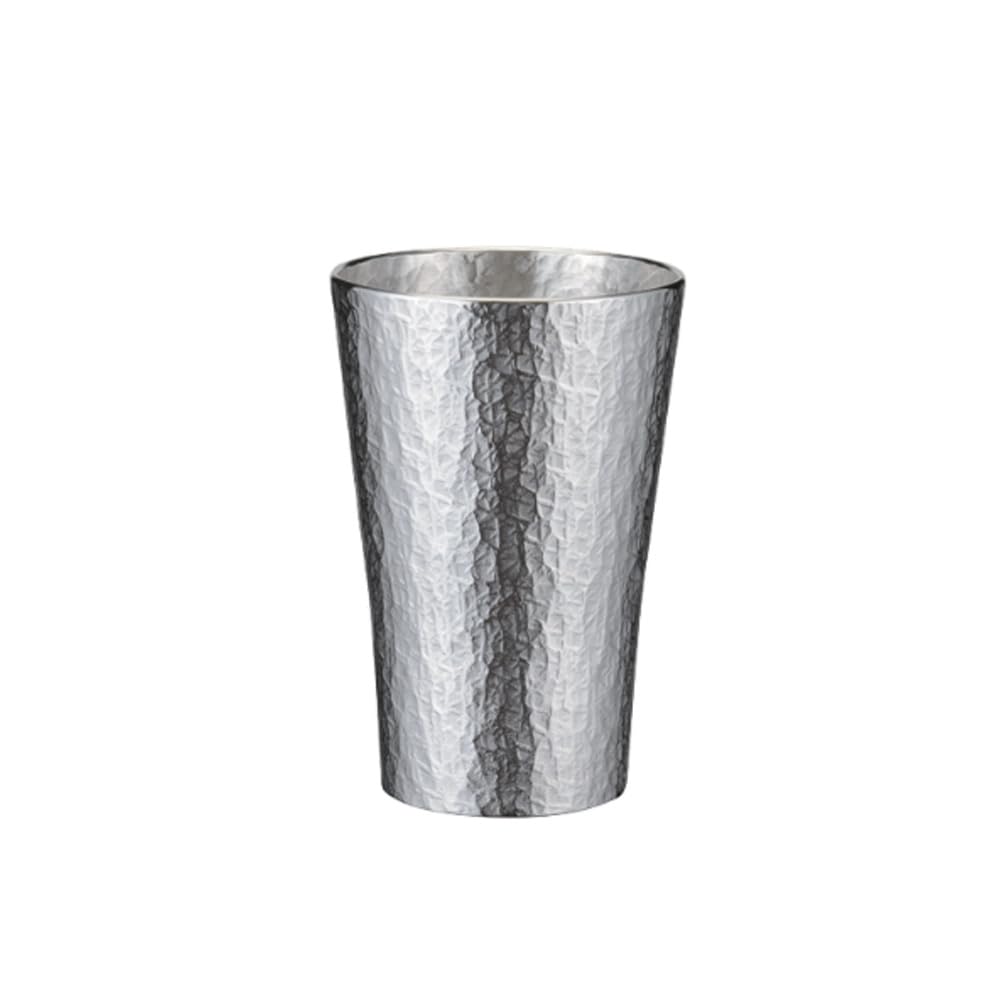
Tin Tumbler


 Teslim edilmediğinde para iadesi