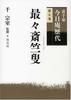
[Chapter 1] This chapter introduces the newly discovered historical document, "Otsuya no Shomotsu," and the author of the book.
[Chapter 2] This chapter covers Mitsuhide's uprising and the attack on Honnoji Temple. It presents shocking accounts, such as the claim that Mitsuhide was in Toba, not Honnoji, when Nobunaga was attacked.
[Chapter 3] This chapter deals with the attack on Nijo Palace, where Nobunaga's eldest son, Nobutada, took refuge.
[Chapter 4] This chapter traces the fate of Mitsuhide's retainers, including the occupation of Azuchi Castle, the Battle of Yamazaki, the fall of Sakamoto Castle, and their subsequent lives. [Chapter 5] This chapter introduces how famous anecdotes are described in the *Otsuya no Shomono*, such as the actions of Maeda Toshinaga when faced with Mitsuhide's rebellion, Tokugawa Ieyasu's "Divine Lord's Crossing of Iga" after learning of Nobunaga's death in Sakai, Sasa Narimasa's "Sarasa Crossing" through the Northern Alps in the harsh winter, and Date Masamune's "Participation in the Odawara Campaign," where he is said to have met Hideyoshi in his death attire.
[Appendix] A table listing the contents of the *Otsuya no Shomono* is included, serving as a guide for actually viewing and accessing the historical document. A book guide is provided, including explanatory notes for major cited sources.
● Mitsuhide was not at Honnoji Temple—A thorough deciphering of the newly discovered historical document *Otsuya no Shomono* approaches the greatest mystery of Sengoku history.
● *Otsuya no Shomono* provides new information regarding the Honnoji Incident. Given the limited availability of reliable contemporary historical sources, this book contains a wealth of valuable information that will contribute to future research. It is essential reading for re-examining the Honnō-ji Incident, detailing how the battle took place, Mitsuhide's actions leading up to it, and the situation after the incident.
● It describes not only the Honnō-ji Incident (Mitsuhide's uprising) but also the Battle of Yamazaki and the fall of Sakamoto Castle (the downfall of Mitsuhide's forces). This book does not focus solely on the Honnō-ji attack, but rather re-examines Mitsuhide's rebellion as a whole.
Newly Discovered Historical Document: "Otsuya no Shomotsu" and its Author, Sekiya Masaharu
"Otsuya no Shomotsu" is a three-volume, three-book work handwritten by Sekiya Masaharu (1615-1685), a military scholar of the Kaga Domain, between 1669 and 1661. It was secretly preserved in the Sekiya family and presented to the former Kaga Domain lords in the early Meiji period. Currently, it is held in the Kaga-Etchu-Nō Bunko collection of the Kanazawa Municipal Tamagawa Library's Early Modern History Materials Section.
This is a collection of approximately 524 anecdotes witnessed and heard by Sekiya Masaharu, covering a wide range of topics. Sometimes the source of the story is also listed, and it contains a great deal of interesting information about the Sengoku period, including accounts of events such as the Koreto Mitsuhide Rebellion, the Battle of Sekigahara, and the Siege of Osaka. While it belongs to the category of "oral records," where the author listened to and recorded others' conversations, it also possesses elements of a memorandum, with occasional notes serving as personal reminders.
The author, Sekiya Masaharu, was the son of Sekiya Sazaemon, a retainer of Oda Nagataka, the lord of Nomura in Mino Province (present-day Ōno-chō, Gifu Prefecture). He was a middle-ranking retainer who served Maeda Toshitsune, the third head of the Kaga Maeda family, and was one of the leading intellectuals within the Kaga domain.


 Teslim edilmediğinde para iadesi