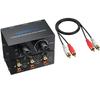
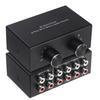
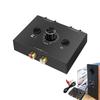
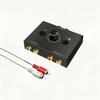
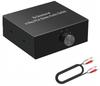
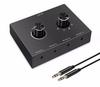
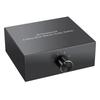
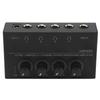
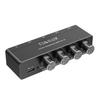
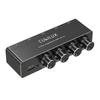
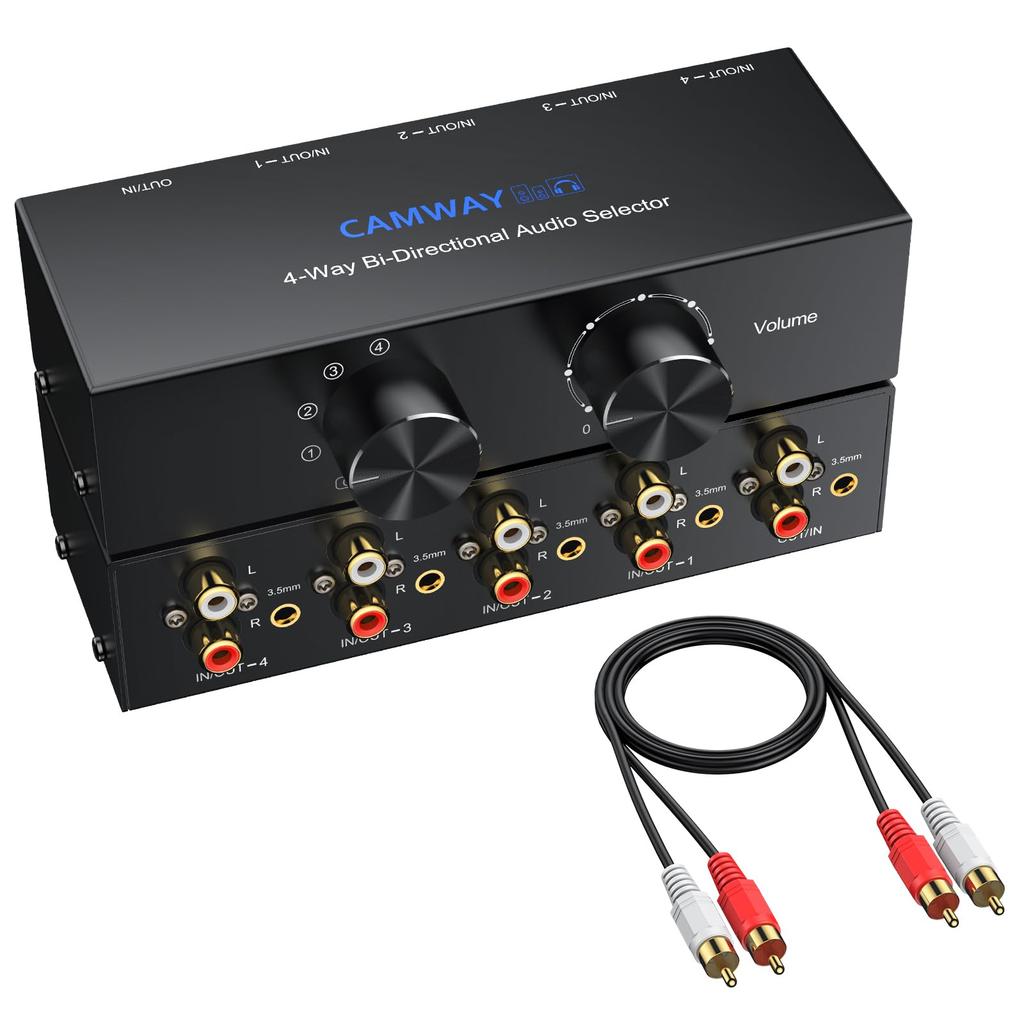
[Flexible bidirectional switching simplifies audio setup]: Easily switch one audio source to four output devices (e.g., outputting PC audio to multiple speakers or headphones), or share four audio sources (e.g., CD player/DVD/transferred audio) to one output device (e.g., one speaker). This eliminates the hassle of frequently plugging and unplugging cables, allowing for efficient management of multiple audio devices.
【Dual AUX and RCA Ports for Wide Compatibility】: Each channel features a 3.5mm AUX stereo jack and L/R RCA connectors, ensuring compatibility with a wide range of audio devices including PCs, laptops, smartphones, tablets, turntables, CD players, amplifiers, powered speakers, and headphones. No additional adapters are needed; it's plug-and-play and ready to use.
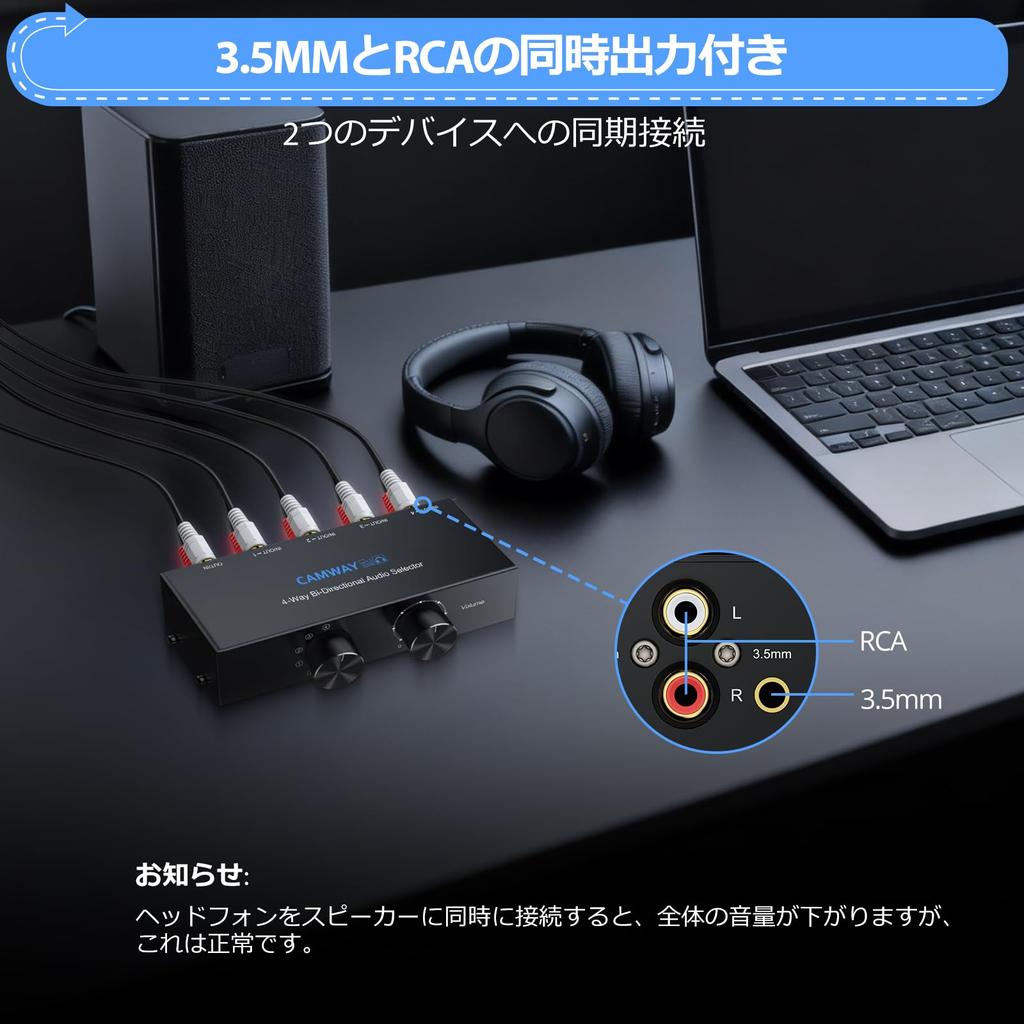
【Unique Design, 3.5mm and RCA Synchronized Output】: Audio is output simultaneously from both the 3.5mm and RCA ports of the selected output channel (1/2/3/4), allowing you to connect headphones and speakers and listen to the same audio source at the same time. (Hint: When connecting low-impedance headphones and speakers simultaneously, the overall volume may be slightly reduced or the sound may be muted because headphones typically consume less power; this is normal. Note: Output channels 1 and 2 operate alternately.)
【Instant Mute, Pure Sound Quality】: Equipped with a dedicated "OFF" button, it allows you to instantly mute or cut off the audio signal without disconnecting the cable, making it extremely convenient. This passive switcher requires no external power supply and its high-quality rotary switch ensures distortion-free, pure, lossless audio transmission.
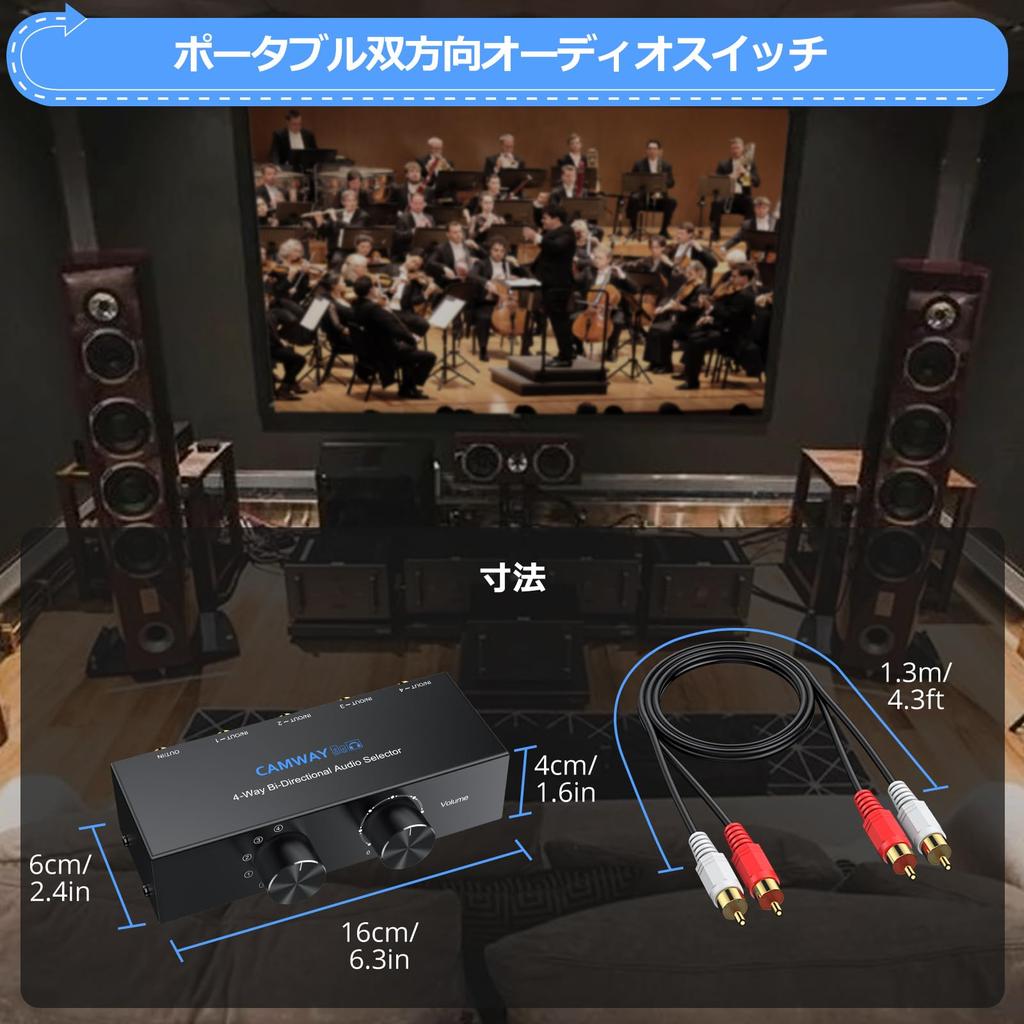
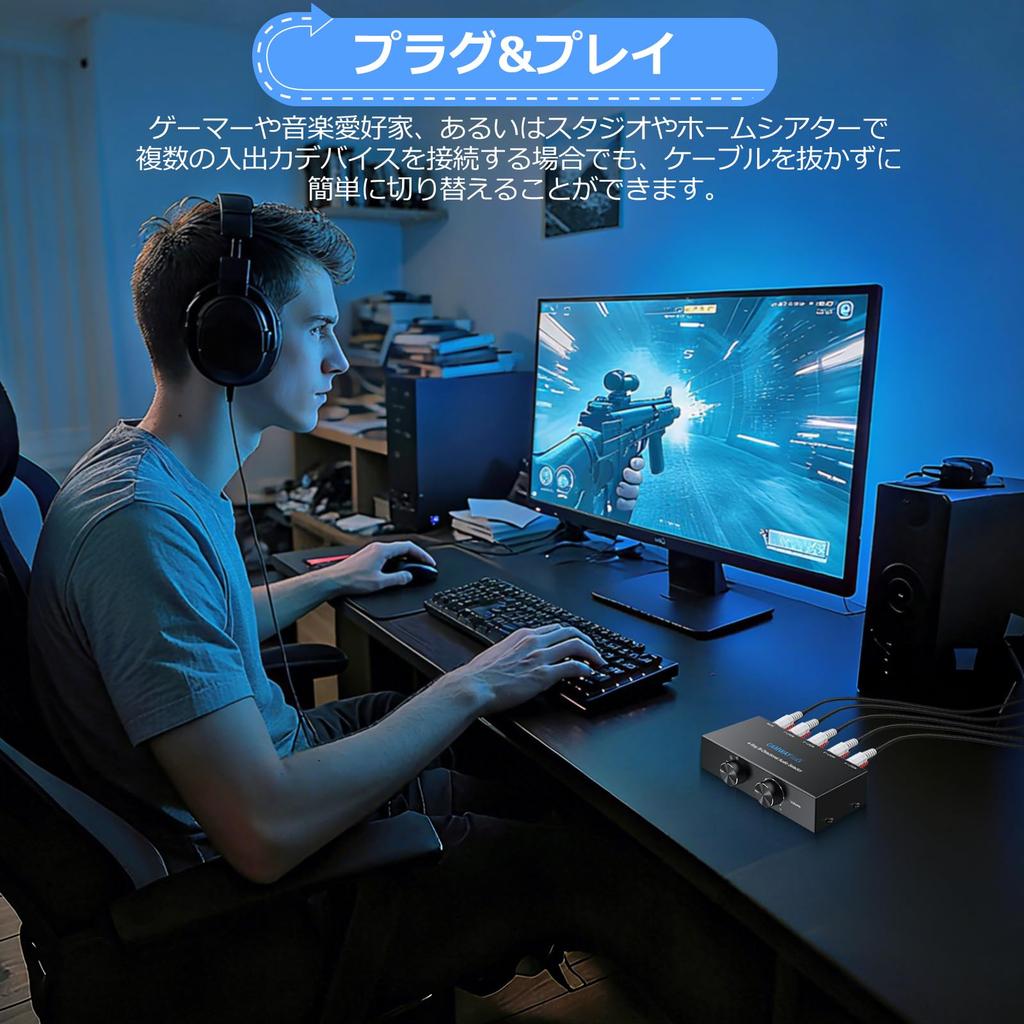
【Plug and Play, Durable】: Simply connect your audio device to begin switching. No software or drivers are required. The sturdy metal housing provides excellent durability and interference resistance. Its compact size (155mm x 81mm x 41mm) means it won't take up much space and easily fits into any setup.
[Flexible bidirectional switching simplifies audio setup]: Easily switch one audio source to four output devices (e.g., outputting PC audio to multiple speakers or headphones), or share four audio sources (e.g., CD player/DVD/transferred audio) to one output device (e.g., one speaker). This eliminates the hassle of frequently plugging and unplugging cables, allowing for efficient management of multiple audio devices.





 Teslim edilmediğinde para iadesi