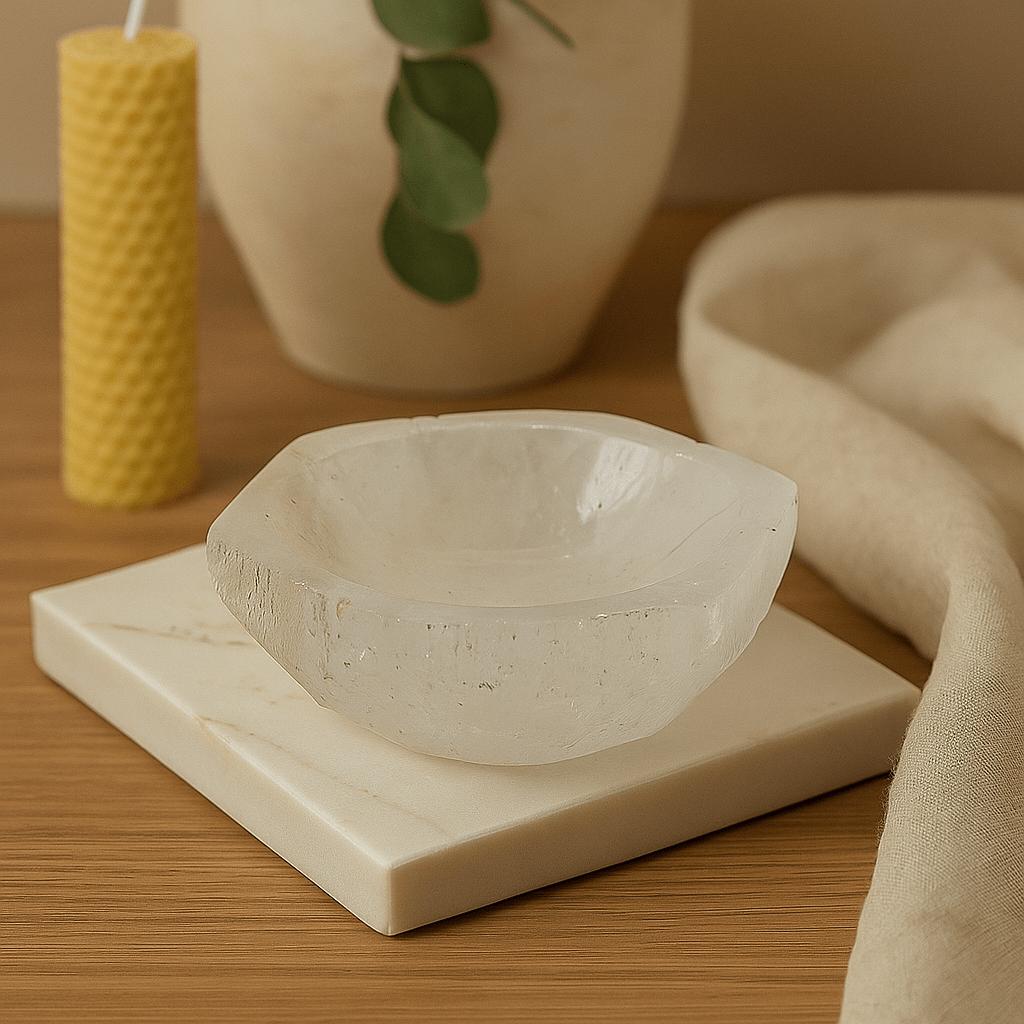
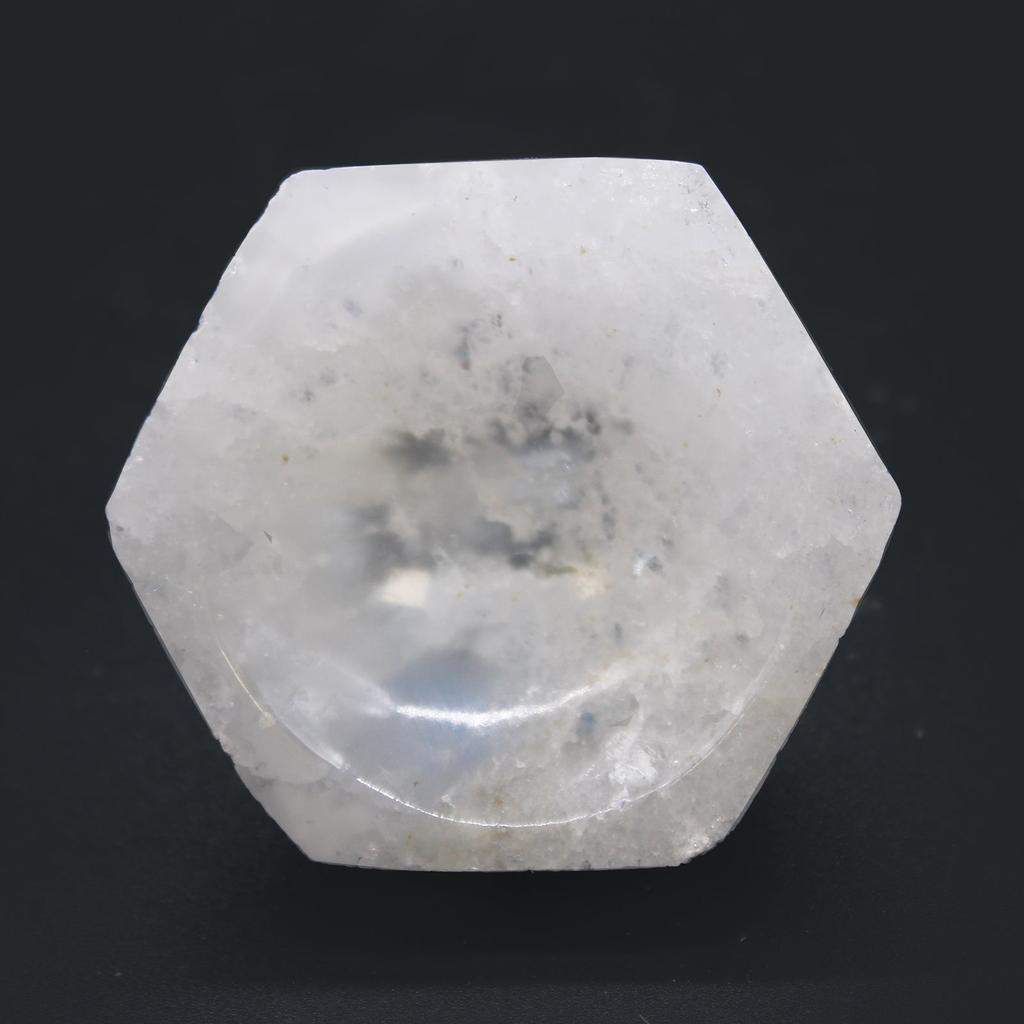
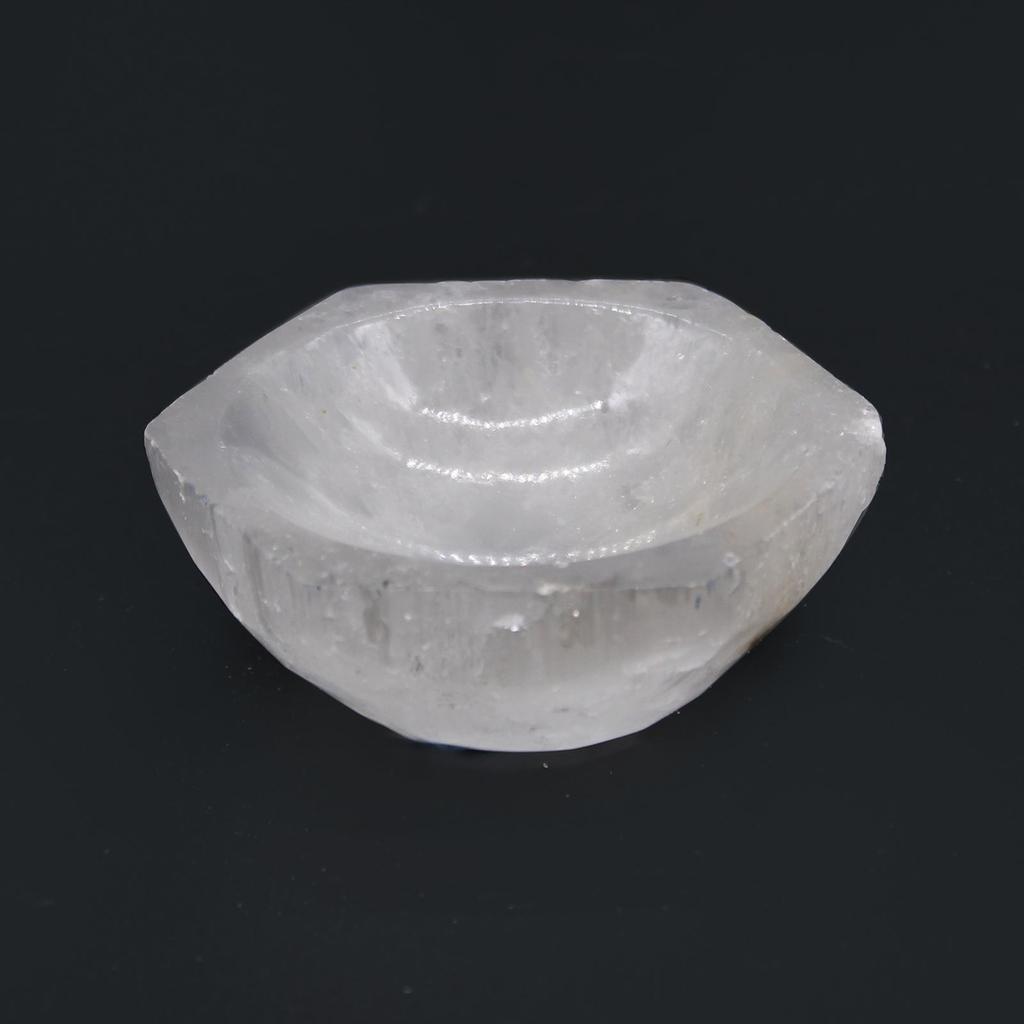
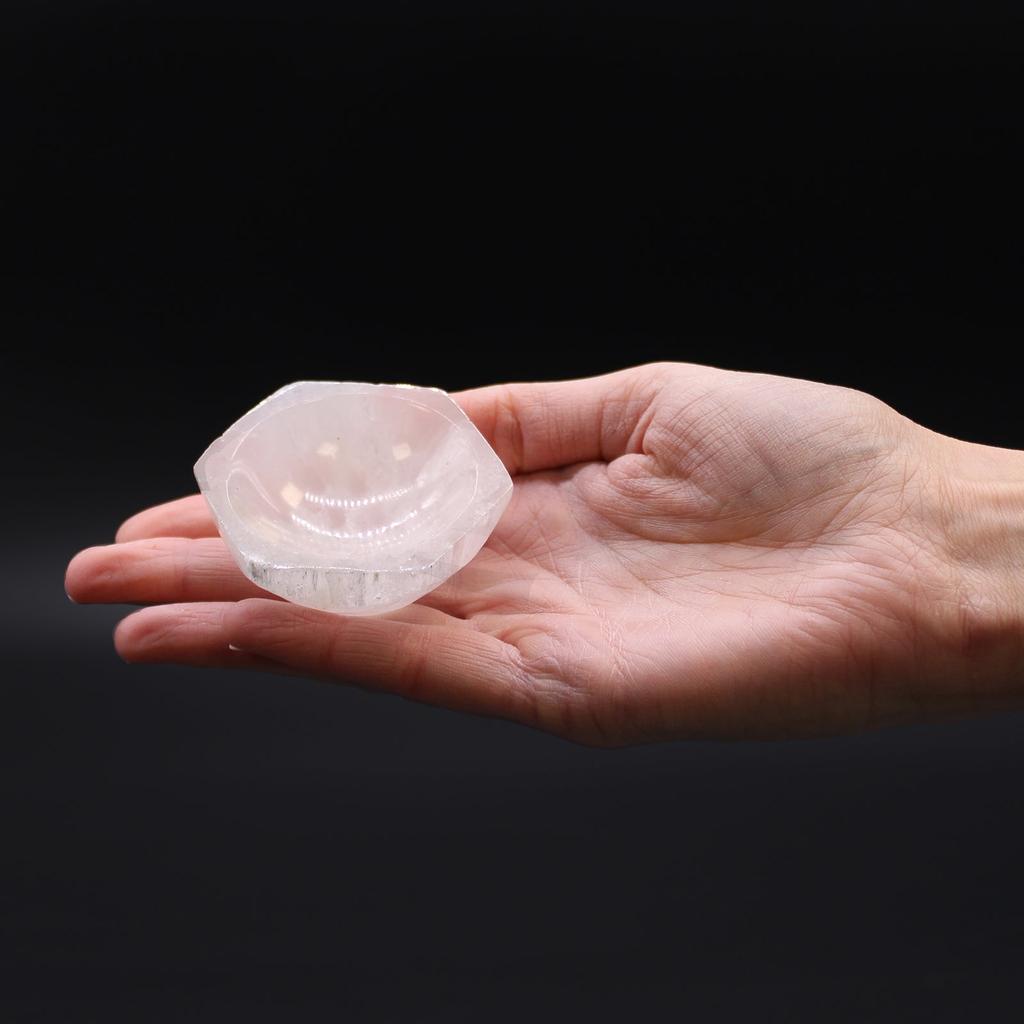
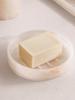
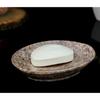
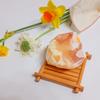
A selenite ritual bowl turns tiny things into a quiet point of focus: a ring placed down at night, a few tumbled stones in the light, a small keepsake given its own place. Its milky translucence and angular hexagon form feel clean and still, made for a bedside table, altar space, or thoughtful corner of the home.
What the stone brings to the room
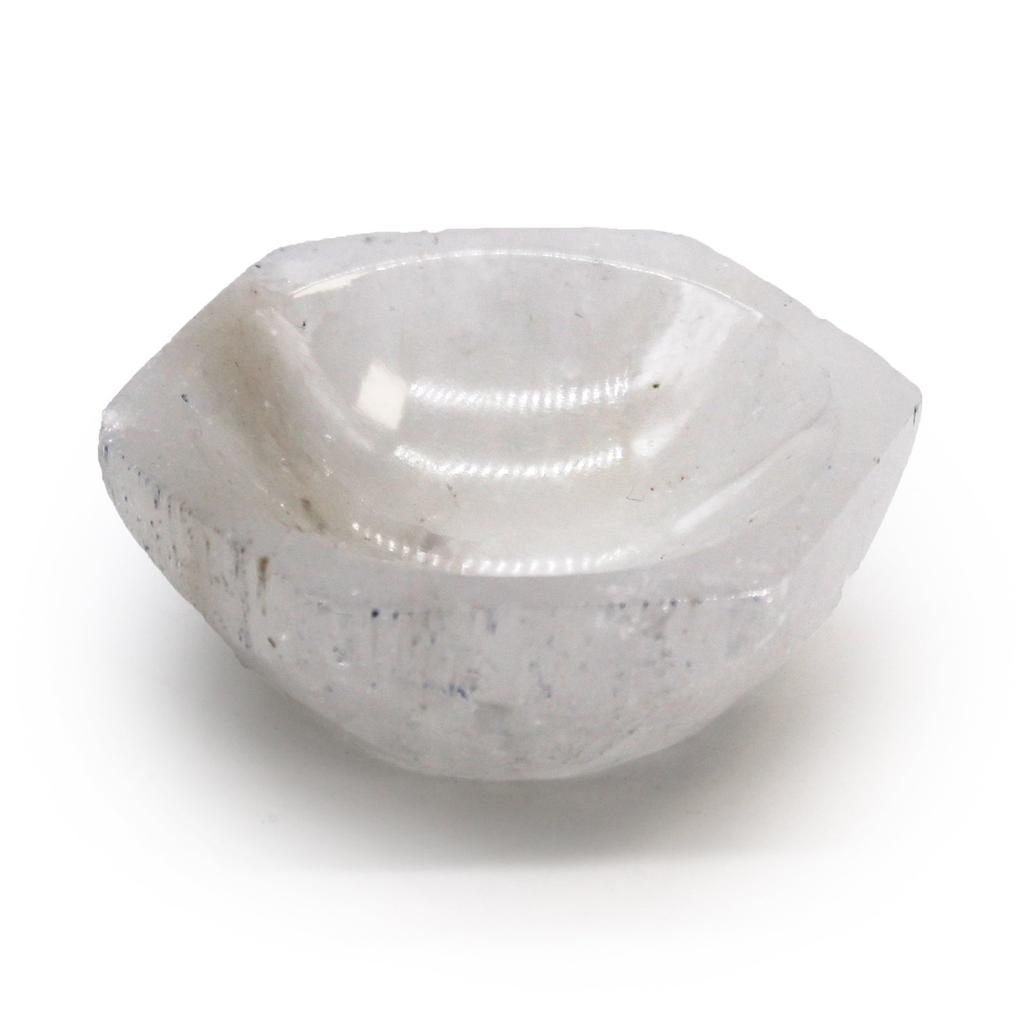
The polished hollow catches light softly, with a pearly, moonlit look rather than a glossy shine.
The hexagonal rim gives the bowl a crisp outline, balancing the natural cloudiness of the mineral.
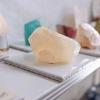
Fine specks and pale mineral lines are visible in the stone, so each piece has its own quiet pattern.
It works beautifully for dry, tiny objects: jewellery, small crystals, charms, or a single meaningful token.
The low, open shape keeps what it holds visible, turning everyday storage into a small act of care.
Polished selenite with a hexagonal form
This piece is made from selenite, a translucent form of gypsum valued for its pale glow and soft, satin-like surface. The bowl is shaped with six sides and a smooth inner well, while natural variation in the stone gives it gentle clouding and small darker flecks.
Using it in daily practice
Place it where you naturally pause: beside the bed, on a dressing table, or near a meditation cushion. Use it for dry objects only, especially pieces you like to return to the same place each day.
Do not burn incense, charcoal, herbs, or resins directly in the bowl. It is best treated as a beautiful holder, not as a heat-safe burner.
Why selenite is kept dry
Selenite is soft, fragile and water-soluble. Moisture can dull the surface, cloud the stone and, over time, cause flaking or loss of lustre. Keep it away from bathrooms, sinks and damp windowsills, and clean it only with a dry, soft cloth or brush.
The moonlit meaning of selenite
The name selenite is linked to Selene, the Greek moon goddess, and the stone has long carried lunar associations because of its pale, luminous qu…
region of manufacture: Morocco


 Teslim edilmediğinde para iadesi








![[Pet] Yüksek Standlı Sofra Takımı](https://img.joomcdn.net/5c599fdc1e4d24df94a4a644abd419637ed3d30c_100_100.jpeg)