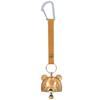
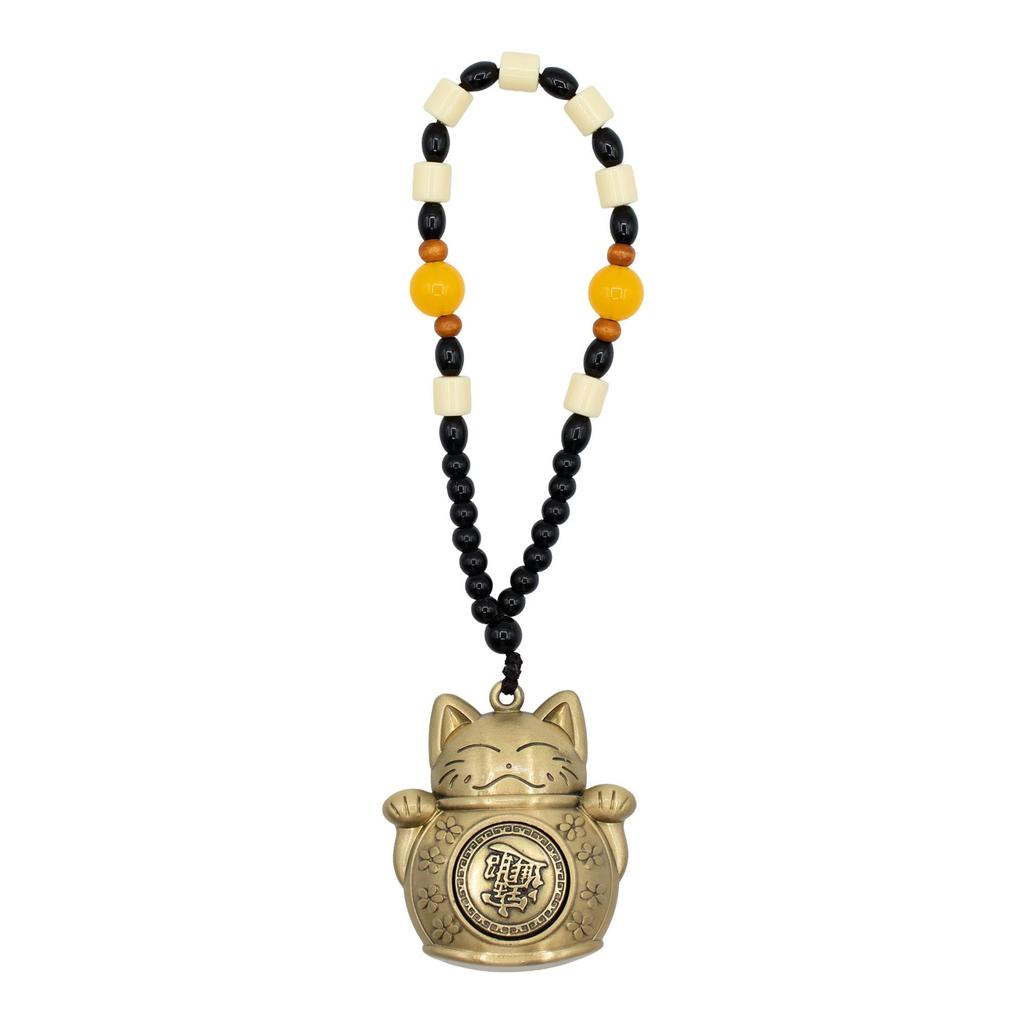
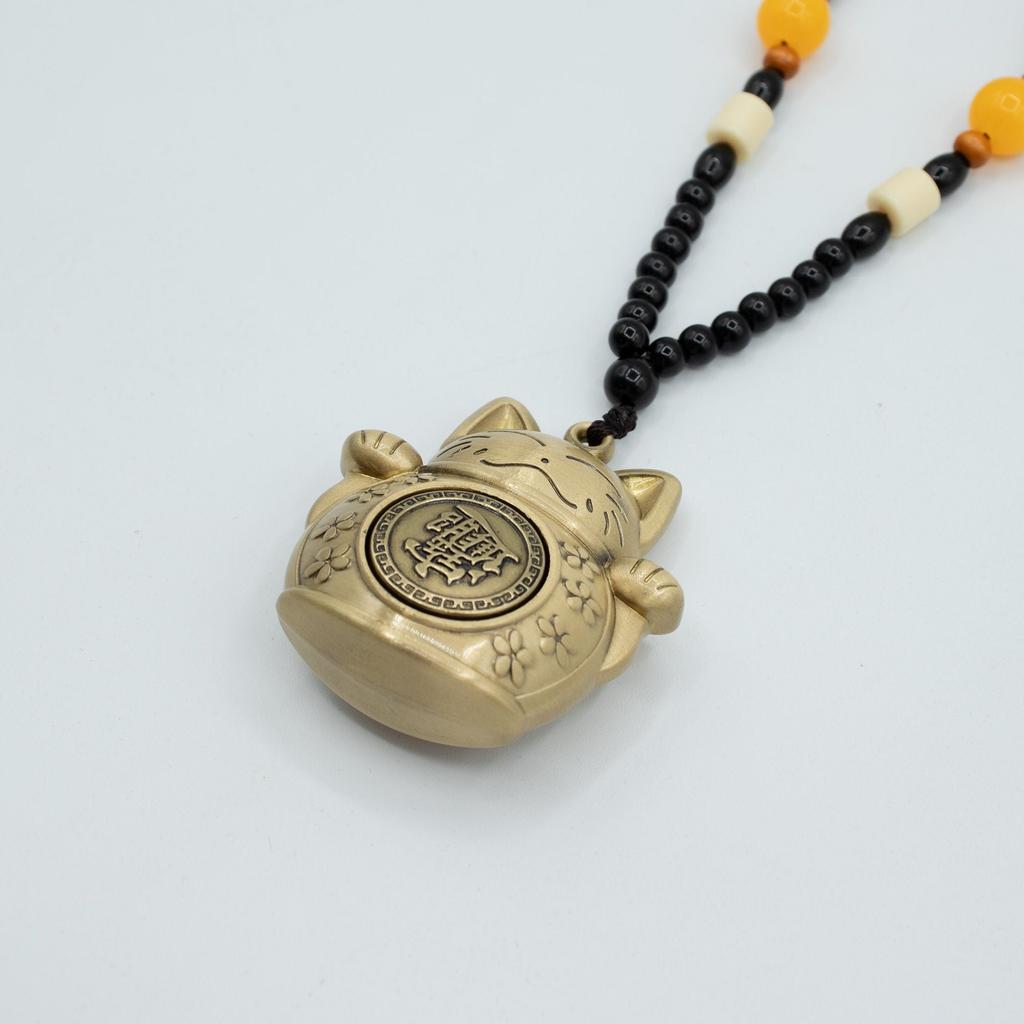
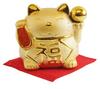
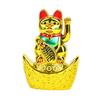
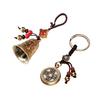
A small brass Feng Shui hanging for a doorway, mirror or quiet corner, centred on the familiar Lucky Cat with a wealth coin. It brings a warm, auspicious note to a threshold, a decorative reminder of welcome, opportunity and the intentions you want to keep close.
The cat, the coin and the glint of brass
The central figure is the Lucky Cat, also known as Maneki-neko, a symbol often linked with luck and opening paths.
The wealth coin in the cat’s paws gives the piece its prosperity theme, especially suited to workspaces, shop counters and entrances.
Brass catches light softly, so the hanging feels present without overwhelming a room.
It works well where you pass often, turning an everyday handle or wall hook into a small point of intention.
The compact form makes it easy to place in a home office, hallway or other personal corner.
What the Lucky Cat means
In East Asian tradition, the Lucky Cat is widely recognised as a sign of luck, prosperity and fresh opportunity. Here, the cat holds a wealth coin, a classic motif connected with financial fortune, trade and positive beginnings. Rather than promising an outcome, it offers a clear visual focus for the wish to welcome good things into a space.
Where to hang it
Choose a place you naturally notice: a door handle, mirror, wall hook, window area or work corner. In Feng Shui-inspired decorating, thresholds are often treated as points of arrival and transition, which makes an entrance a fitting spot for a prosperity symbol.
Brass with a soft aged character
The hanging is made from brass, a metal loved for its golden warmth and gentle patina. Wipe it with a dry, soft cloth when needed, and keep it away from prolonged damp so the surface keeps its character.
A contemporary prosperity symbol
Lucky Cat imagery is especially familiar in East Asian homes, shops and restaurants, where it is used as a friendly sign of welcome and commercial good fortune. The wealth coin strengthens that association, linking t…
region of manufacture: China



 Teslim edilmediğinde para iadesi


![Şanslı Kedi Obsidyen İyi Şans Güç Taşı Kolye Unisex [Koai]](https://img.joomcdn.net/7fe549fee3af1d37b7a2df3efc90b9452d4b94b4_100_100.jpeg)