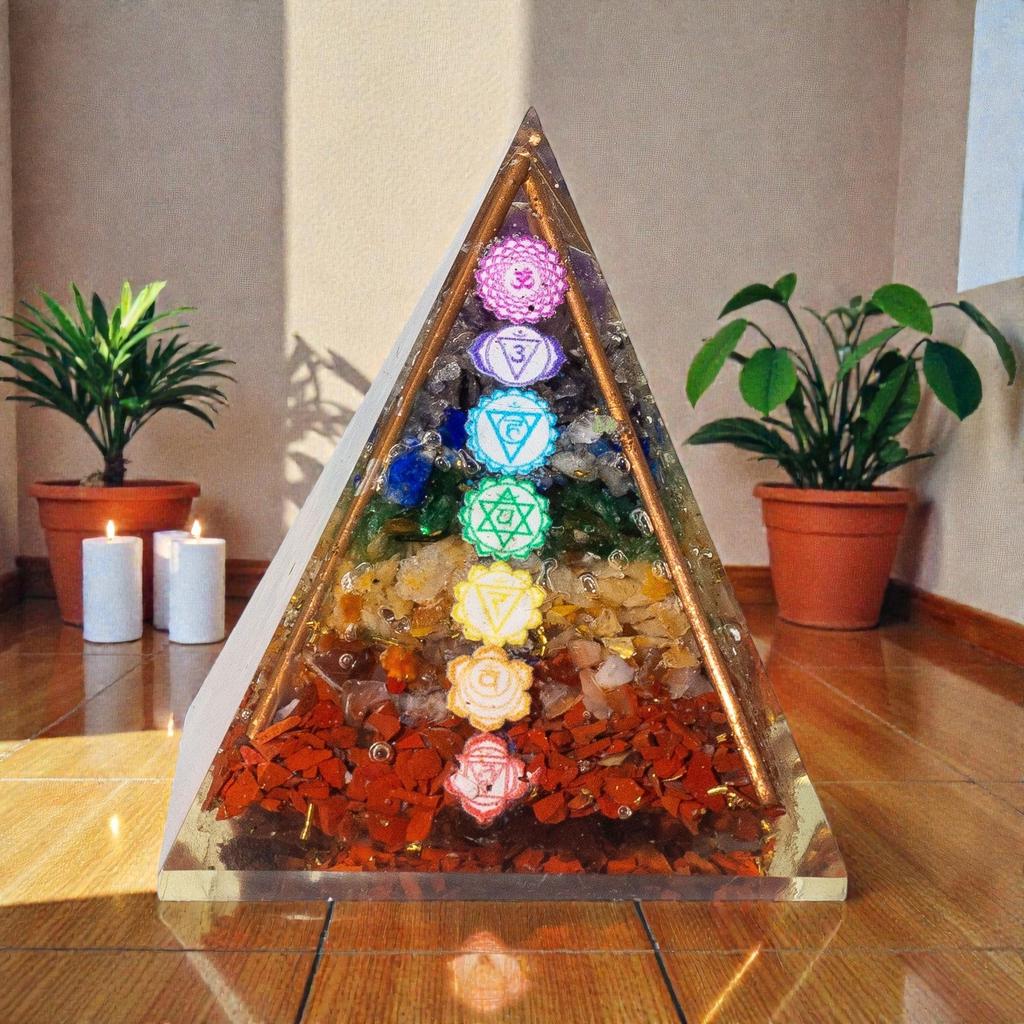
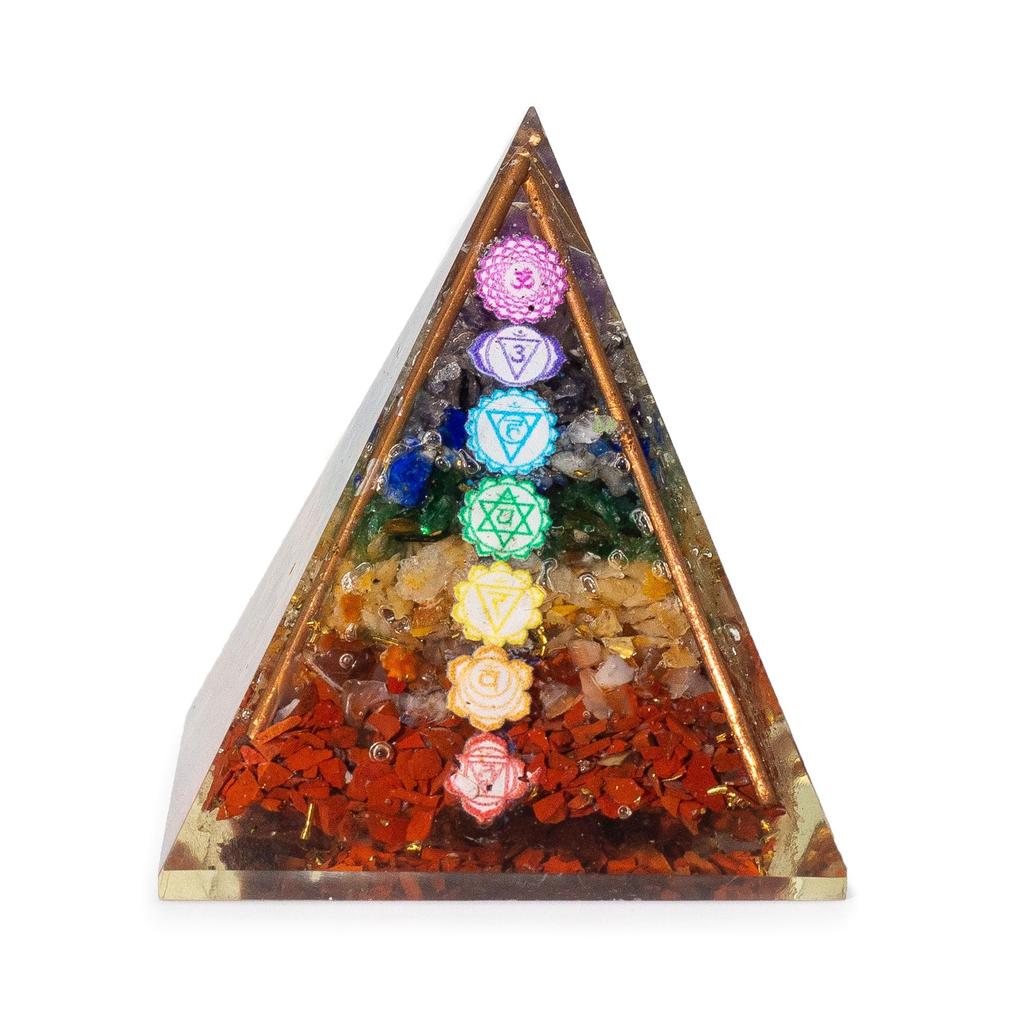
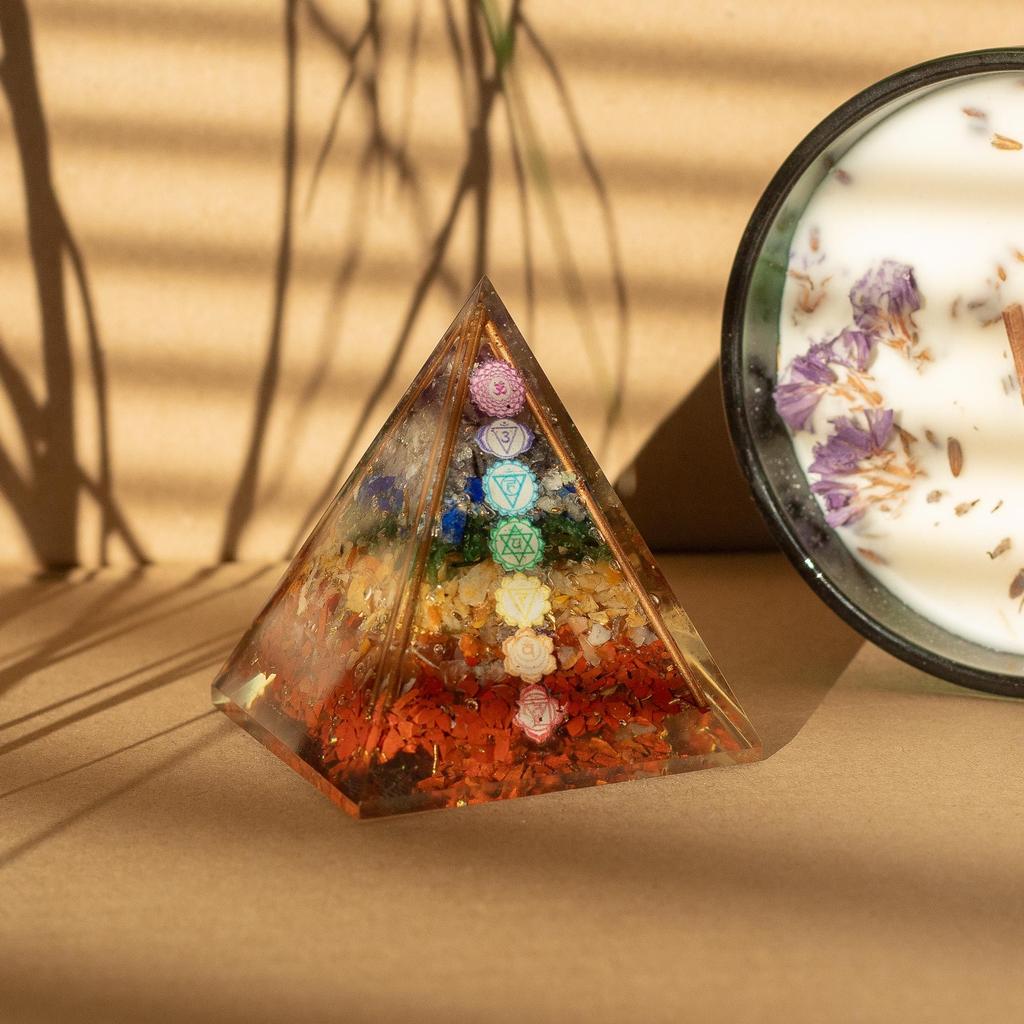
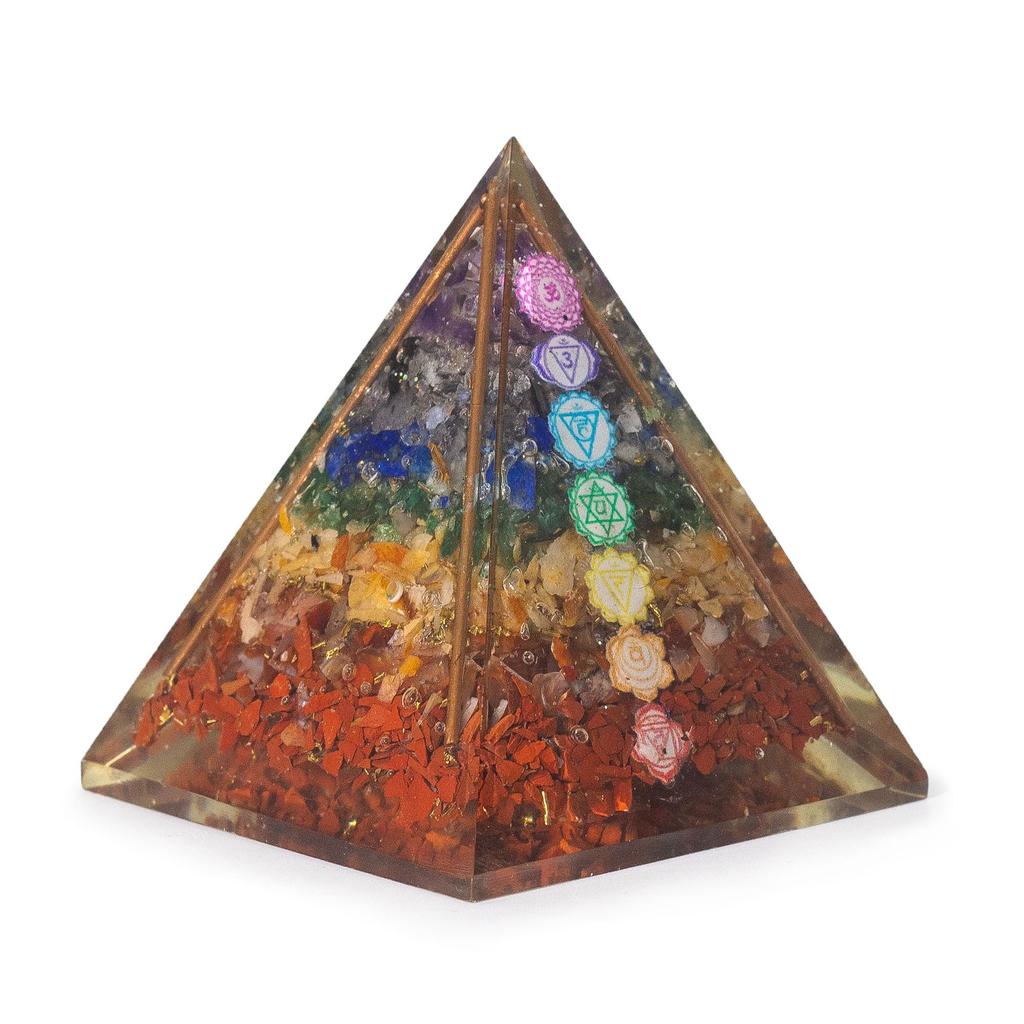
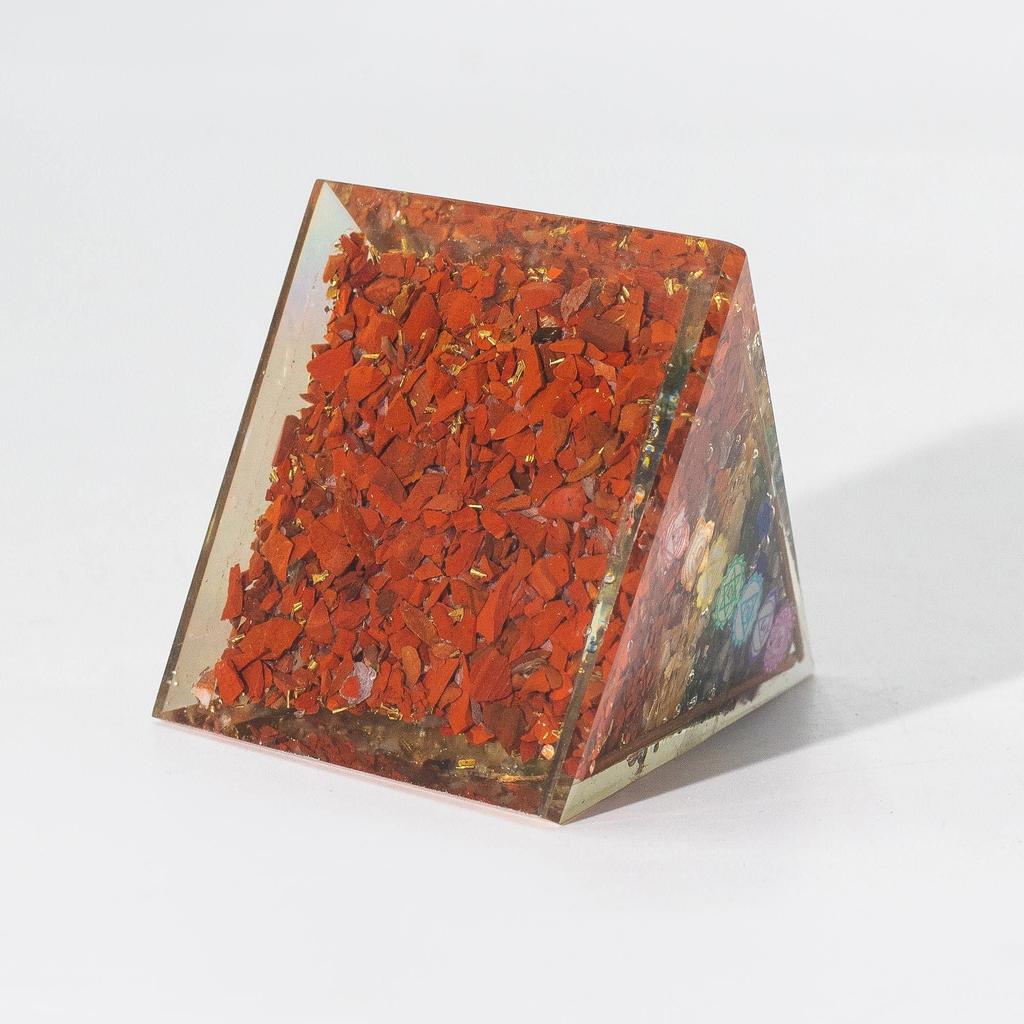
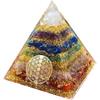
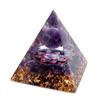
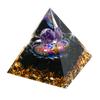
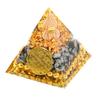
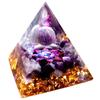
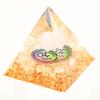
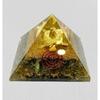
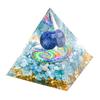
A medium orgonite pyramid measuring approximately 7 cm wide by 6 cm tall, containing copper bars and seven distinct gemstone chip colours representing the seven chakras.
What Sets This Piece Apart
The seven chakra chips create visible colour layers within the resin — red (root), orange (sacral), yellow (solar plexus), green (heart), blue (throat), indigo (third eye), and violet (crown) — making this one of the most visually colourful pyramids in the orgonite collection.
Copper bars rather than copper shavings give the metallic component a bolder, more structured appearance inside the resin, with warm golden lines visible through the pyramid's faces.
In energy healing traditions, a seven-chakra piece is used for full-body energy balancing rather than targeting a single intention, making it the most versatile orgonite pyramid for general use.
At 7×6 cm, the medium size provides enough space for the colour layers to be distinct and readable — in smaller pyramids, the seven colours can blur together.
Each pyramid is individually handmade, so the exact layering, colour intensity, and copper bar placement will vary from piece to piece.
The Seven Chakras in Crystal Healing
The chakra system originates in ancient Indian spiritual traditions and describes seven energy centres running along the spine, each associated with specific aspects of physical, emotional, and spiritual wellbeing. In crystal healing practice, each chakra corresponds to a colour and a family of gemstones: red jasper or garnet for the root chakra (grounding, security), carnelian for the sacral (creativity, emotion), citrine or yellow jasper for the solar plexus (confidence, personal power), aventurine or peridot for the heart (love, compassion), sodalite or lapis lazuli for the throat (communication, truth), amethyst or iolite for the third eye (intuition, insight), and clear quartz or amethyst for the crown (spiritual connection, awareness).
A seven-chakra orgonite pyramid brings all these energies together in a single object. Practitioners use it as a balancing tool — placed in a room, it is intended to support the harmonious flow of energy across all seven centres rather than amplifying any one. This makes it a good choice for general home or workspace placement, or for someone who works with the chakra system as a whole rather than focusing on specific centres.
Copper Bars and Energy Flow
Where most orgonite uses copper shavings or small particles, this pyramid contains copper bars — longer, more substantial pieces of metal that create visible linear elements within the resin. Copper is one of the most effective electrical conductors found in nature, and in orgonite theory it serves as the primary channel for attracting and moving energy through the piece. The bar form creates directional pathways rather than the scattered, diffuse energy pattern of shavings, which some practitioners prefer for more structured energy work.
Placement and Care
The chakra colour spectrum makes this pyramid a natural fit for meditation spaces, yoga studios, treatment rooms, and healing practitioner offices where the chakra system is part of the visual and therapeutic language. It also works well as a general-purpose room harmoniser on a living room shelf, office desk, or bedroom nightstand. The rainbow of colours makes it one of the more decoratively appealing pyramids in the collection — even without any particular interest in chakra work, the layered colours are visually striking. Wipe with a soft, dry cloth. Avoid prolonged direct sunlight to prevent resin yellowing.
A Note on Gifting
The seven-chakra theme makes this the most broadly giftable orgonite pyramid in the medium range. Anyone interested in yoga, meditation, Reiki, crystal healing, or holistic wellness will recognise and appreciate the chakra colour symbolism. The colourful appearance also appeals to recipients who simply enjoy unusual, handcrafted decorative objects. Pairs naturally with chakra-themed candles, incense, or gemstone jewellery.
FAQ
What gemstones represent the seven chakras in this pyramid?The exact stones vary between batches due to the handmade process, but each colour band corresponds to a chakra: red (root), orange (sacral), yellow (solar plexus), green (heart), blue (throat), indigo (third eye), and violet (crown). Common stones used include jasper, carnelian, citrine, aventurine, sodalite, and amethyst.
Are the chakra colours always layered in order?The artisan aims for a recognisable colour sequence, but because each piece is individually poured and set by hand, the layers may blend at their edges or vary slightly in thickness. No two pyramids will have identical layering.
What do the copper bars do differently from copper shavings?In orgonite theory,