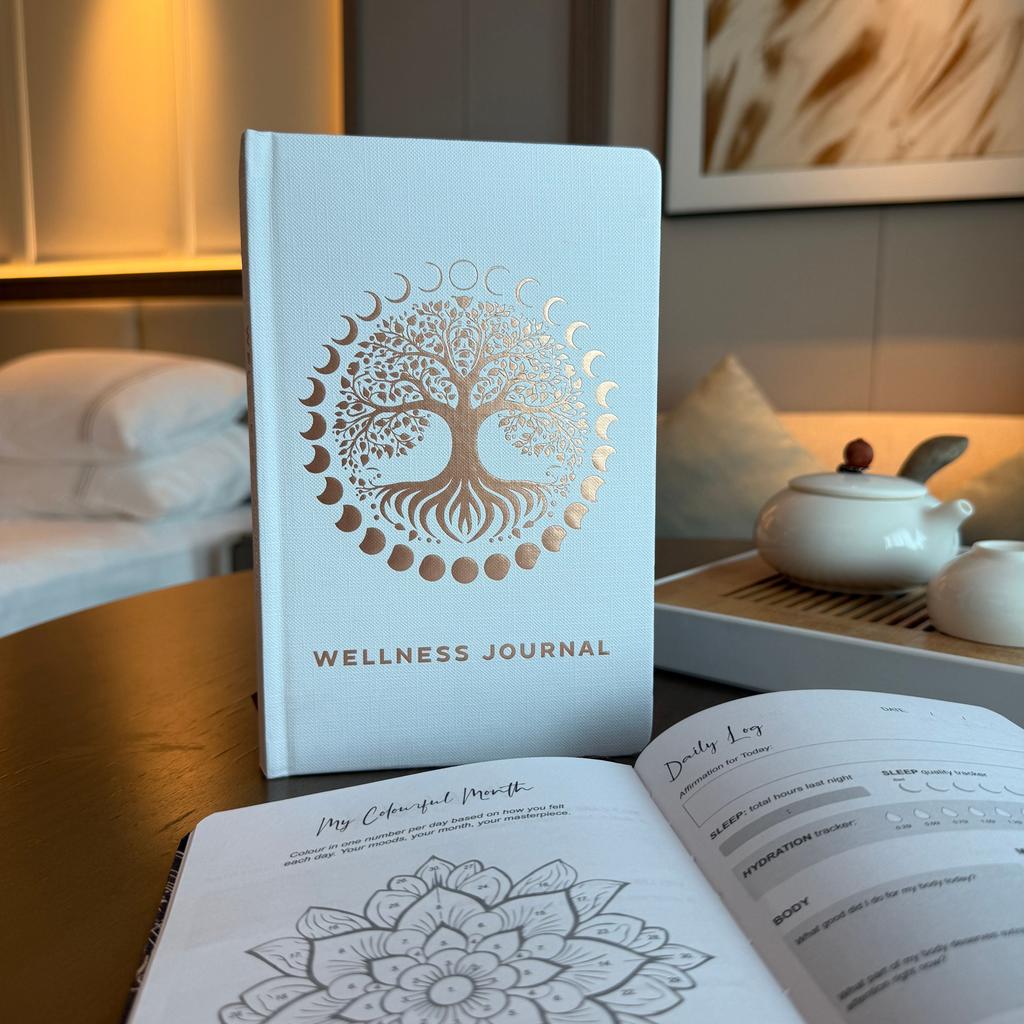
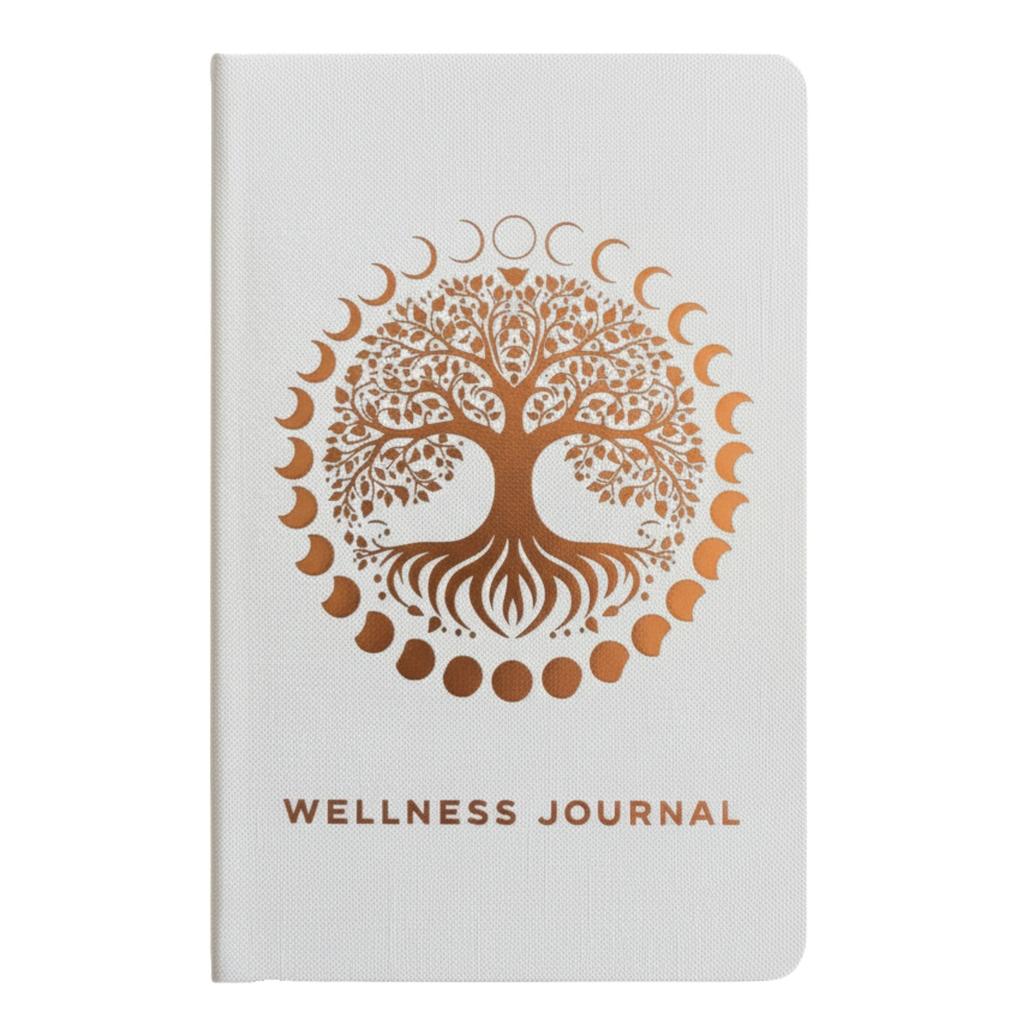
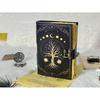
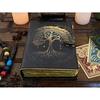
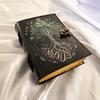
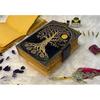
A guided wellness journal with 120 structured pages inside a white polyester cover with rose gold Tree of Life detailing. Designed for daily check-ins with yourself — body, mind, and mood — rather than blank-page free writing.
What Is Inside
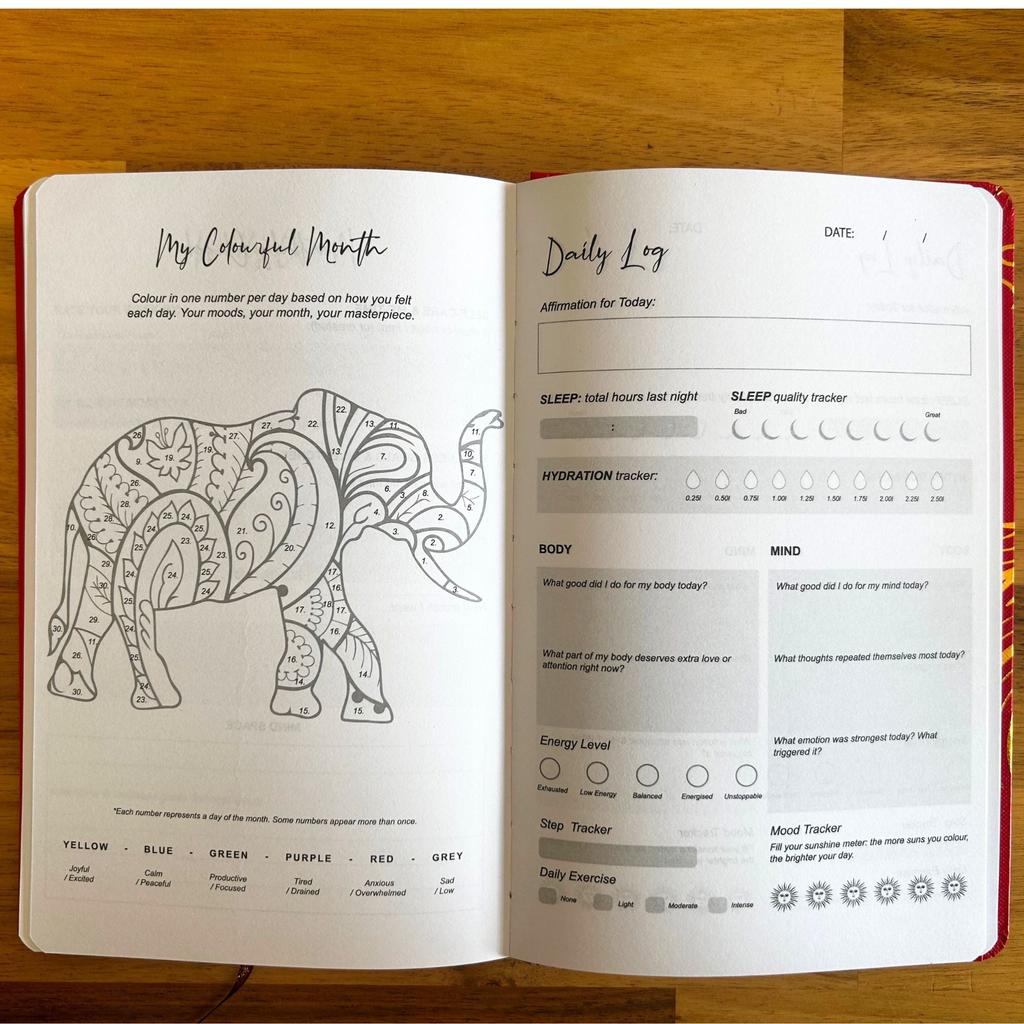
120 guided pages. Each page provides specific prompts and spaces for wellbeing reflection: how you slept, how your body feels, what your energy levels are like, what you are doing to look after yourself, and what you need more or less of. The structure turns self-care from a vague idea into something you actually track.
Mood and energy trackers. Visual tools for charting how you feel across days and weeks. Patterns that are invisible in your head become surprisingly clear on paper — most people notice connections between sleep, movement, food, social time, and emotional state within the first few weeks of consistent use.
Affirmation and intention spaces. A dedicated area for writing a short positive statement or daily intention. The act of physically writing these down — rather than thinking them or reading them on a screen — engages a slower, more deliberate kind of attention.
Colouring and mindfulness sections. Creative pages woven through the journal as a change of pace between written reflection. These are not filler — they function as a breathing space, a deliberate shift from analytical thinking to something more meditative.
What Makes a Wellness Journal Different from a Gratitude Journal
A gratitude journal focuses on noticing and recording what is good in your life. A wellness journal takes a broader view: it asks how you are doing across several dimensions — physical, emotional, mental — and encourages you to notice what supports your wellbeing and what depletes it. The prompts here are less about counting blessings and more about honest self-assessment. How did you sleep? Did you move your body? What drained you today? What restored you? Over time, the journal becomes a record of what actually works for you — not what you think should work, but what the data of your own life shows.
This makes it a practical tool as much as a reflective one. People often discover that their best days share specific features (enough sleep, time outdoors, less screen time, a particular kind of social interaction) and that their worst days share different ones. A wellness journal surfaces those patterns in a way that living day-to-day rarely does.
The Cover
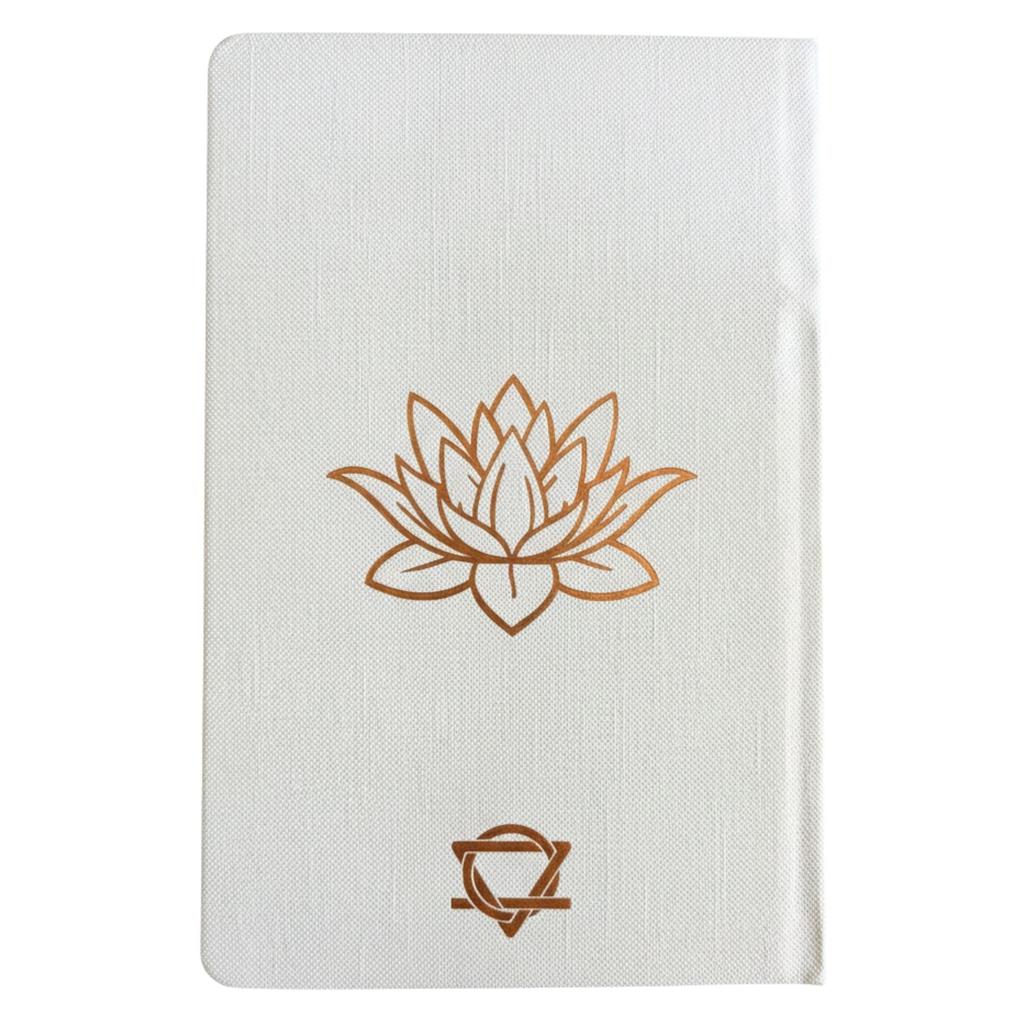
White polyester with a rose gold Tree of Life design on the front. The white is clean and bright without being stark — the polyester has a slight softness to the touch that takes the clinical edge off the colour. The rose gold detailing is metallic foil, warm-toned and reflective, sitting somewhere between pink and copper depending on the light. White and rose gold is a colour combination that reads as fresh, feminine-leaning, and modern — it looks deliberately chosen rather than default.
The Tree of Life is one of the most widely recognised symbols across world cultures: it appears in Celtic, Norse, Buddhist, Hindu, Kabbalistic, and Christian traditions, always carrying a similar core meaning — growth, connection, rootedness, the relationship between what is grounded and what reaches upward. On a wellness journal, it is a fitting emblem: the idea that personal wellbeing, like a tree, depends on both strong roots (sleep, nutrition, rest, boundaries) and upward growth (goals, relationships, purpose, creativity).
The Build
The polyester cover is softer and more flexible than a hardback — it sits comfortably in the hand and bends slightly in a bag without creasing the pages. Approximate dimensions are 21 × 14.5 cm (roughly A5), with a slim spine. Light enough to carry daily or keep on a bedside table. The white cover will show marks more readily than darker journals, so it benefits from being stored in a bag pocket or sleeve if carried regularly.
How People Use It
Most people settle into a rhythm of either morning entries (setting intentions and checking in with how they feel at the start of the day) or evening entries (reflecting on the day just gone). Either works — the prompts are about noticing rather than planning, so they suit any time of day. Some people fill a page daily; others use it every few days or weekly. At 120 pages, the journal lasts anywhere from four months to a full year depending on your pace, which means you can track seasonal patterns, not just daily fluctuations.
A Note on Gifting
A wellness journal is a particularly thoughtful gift for someone who is going through a period of change, recovery, or recalibration — a new job, a move, the end of a relationship, the start of a health journey, or simply a season where life has felt overwhelming. The guided structure means the